A lever tap that can no longer be turned, a pill organizer that is forgotten every morning, a staircase that becomes an obstacle: the daily difficulties of seniors do not start with a medical diagnosis. They begin with a failed gesture, a poorly designed object, or a home that was never thought out for aging. Solutions exist, but they are not all equal, and their effectiveness primarily depends on the specific situation of each individual.
Reimbursed medical telemonitoring: what it changes for home care
Since the generalization of the system in 2023, Health Insurance covers medical telemonitoring packages for certain chronic diseases, including heart failure, diabetes, and respiratory failure. In practice, a sensor or connected device transmits data to a medical team without the elderly person needing to travel.
This reimbursement changes the game for fragile seniors living at home. Previously, these connected tools were reserved for patients monitored in specialized facilities or for those who could invest in non-reimbursed equipment. The telemonitoring package makes connected monitoring accessible without prohibitive out-of-pocket costs.
Feedback varies on this point: some healthcare professionals report that the installation and handling of the equipment require initial support, especially for those who are not familiar with technology. Planning a visit from a nurse or caregiver for setup prevents the device from ending up in a drawer.
Among the solutions for seniors from Green Seniors, there are services that help identify and coordinate this type of technical support at home, in addition to medical follow-up.
Intergenerational cohabitation: a structured alternative to isolation
Social isolation kills more than many chronic illnesses. Platforms like Homiz, Colette, or Ensemble2Générations have formalized intergenerational cohabitation with a precise framework: charters, integrated social mediation, partnerships with local authorities since 2022-2023.
The principle is simple. A senior with a spare room welcomes a student or a young professional. In exchange for a modest rent or a caring presence, the senior maintains daily social contact without solely depending on their family. The young person, in turn, gains access to affordable housing.
What distinguishes these arrangements from simple shared housing is the mediation. In case of tension regarding schedules, noise, or lifestyle habits, a mediator intervenes. Some departments even subsidize the arrangement, reducing costs for both parties.
This is not a solution for individuals with advanced loss of autonomy. We are talking about autonomous or semi-autonomous seniors who wish to remain in their homes without living alone.
Inclusive housing and Alzheimer villages: rethinking living environments
Several regions have been experimenting since 2023 with inclusive housing and Alzheimer villages as an alternative to traditional nursing homes. The concept is based on an environment that resembles an ordinary neighborhood: shops, open public spaces, integrated home automation, and the presence of professionals without white coats.
For a disoriented person, living in a space that replicates normal life slows down withdrawal. One can go buy bread, sit on a bench, and meet neighbors. Home automation (motion detectors, automatic locking of cooking plates, adaptive lighting) provides security without confinement.
These structures remain few in number, and access depends on the department. Inclusive housing, on the other hand, is developing faster: grouped housing with common spaces and a shared social life project. It is a middle ground between traditional home and institution.
What home automation concretely brings to these homes
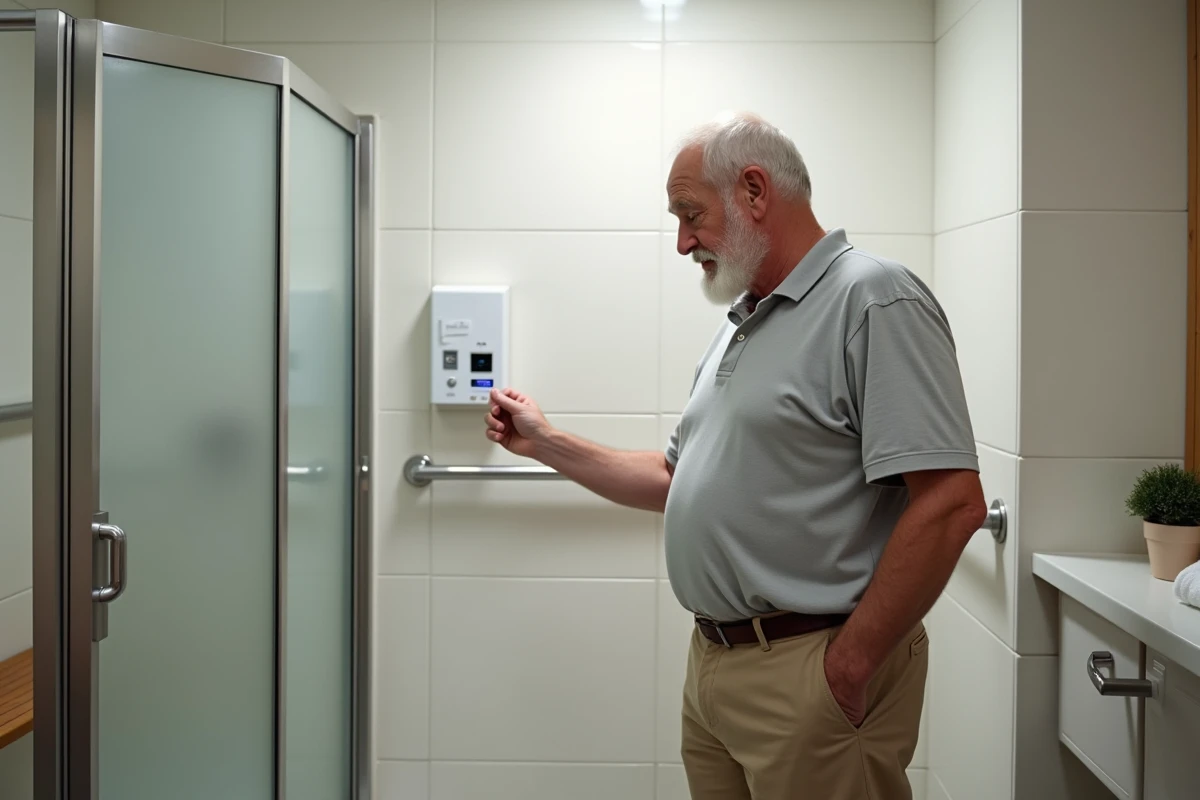
- Fall or prolonged inactivity detectors that alert a designated contact without automatically triggering emergency services, reducing false alarms and stress
- Automatic lighting that adapts to time and movement, limiting the risk of nighttime falls in hallways
- Connected locks allowing a caregiver or professional to access the home in case of emergency, without the senior needing to get up to open
Social robotics and interactive companions: gadget or real support
Telepresence robots and interactive companions are arriving in some residences and French experiments. A telepresence robot allows a distant relative to “visit” the senior via a mobile screen that moves around the home. Interactive companions (robotic stuffed animals, adapted voice assistants) aim to maintain cognitive stimulation and a sense of presence.
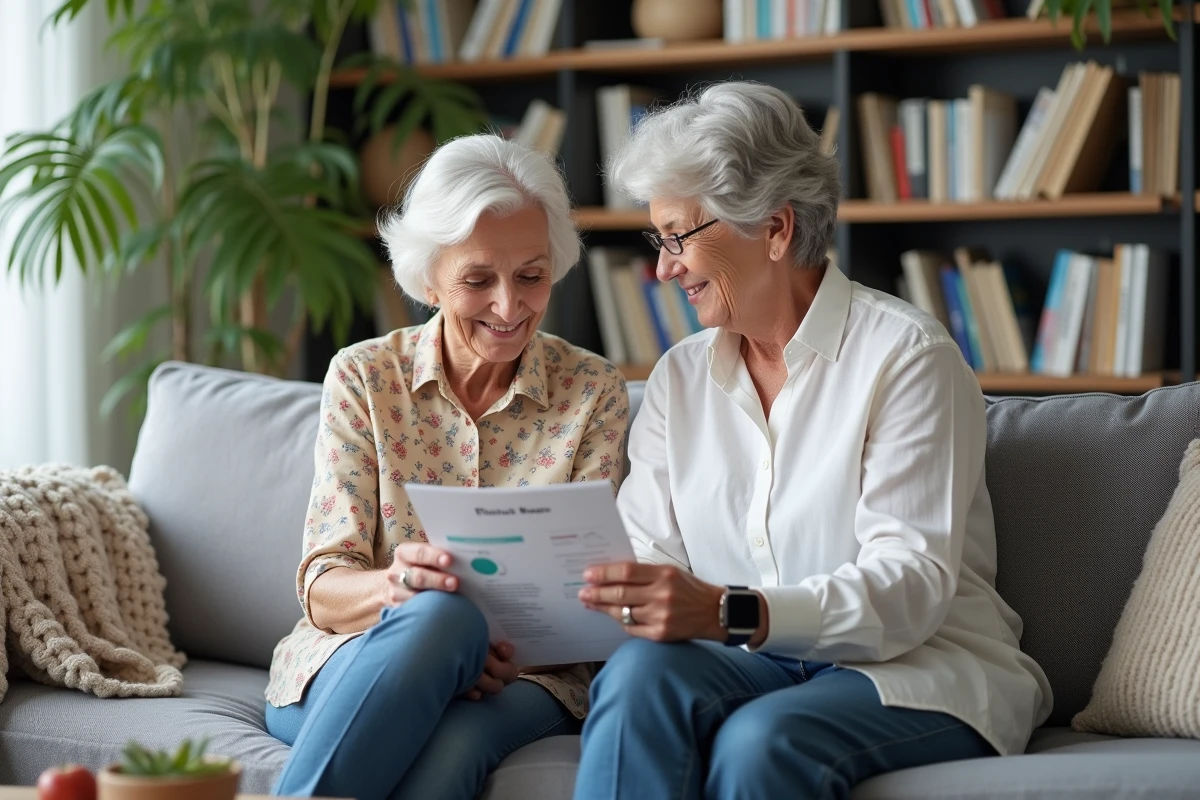
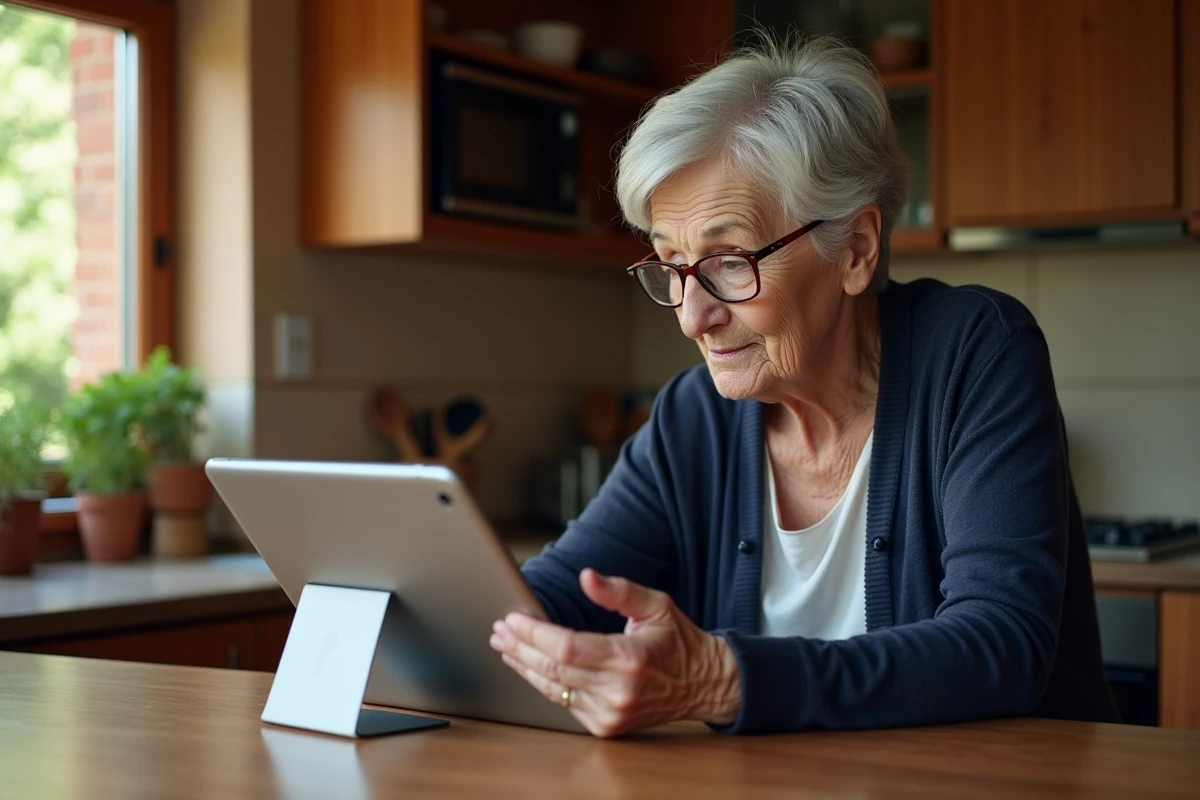
On the ground, results depend greatly on the individual’s profile. A curious senior who is comfortable with voice technology will accept a voice assistant for medication reminders or weather updates. A person with cognitive impairments may find comfort in a screenless robotic companion, which is more intuitive.
Walking or transfer assistance robots (from bed to chair) also exist, but their deployment remains marginal in France. Cost, bulkiness, and the need for training for the caregiver hinder adoption.
Criteria for evaluating whether a technological device is worth the investment
- Can the person use it independently after a demonstration, or is permanent assistance required?
- Does the device solve a specific identified problem (forgetting medication, isolation, risk of falling) or does it address a need imagined by those around them?
- Is the cost covered, even partially, by the APA, a departmental aid, or a package from Health Insurance?
The best technology for a senior is the one they actually use. A large-button phone will always be a better choice than a cutting-edge tablet if the person refuses to touch a touchscreen. Starting from the daily gesture that poses a problem, not from the most modern solution, remains the most reliable reflex for choosing the right equipment.