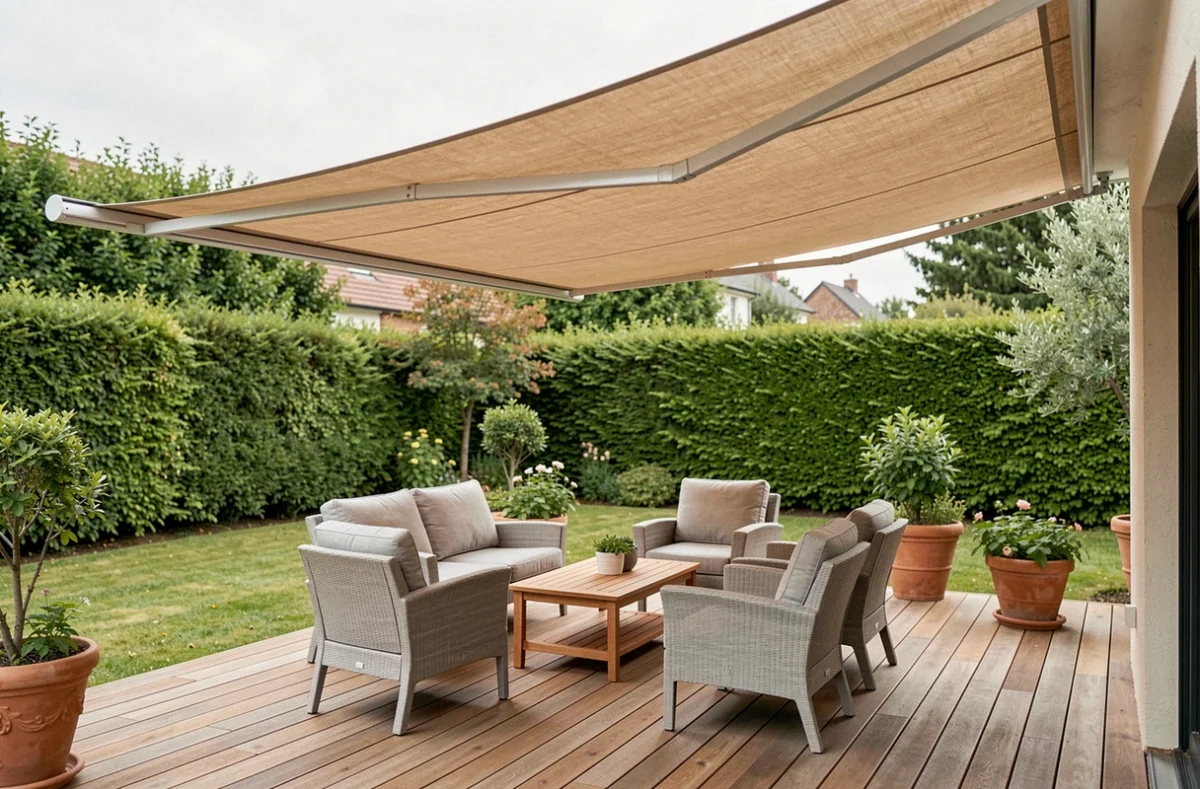
A west-facing terrace with a three-meter bay window does not pose the same problem as a northeast balcony of four square meters. The awning suitable for one will be oversized or poorly anchored for the other. Before comparing fabrics or motors, one should first look at the wall, the exposure, and what the town hall allows.
Prior declaration and co-ownership: the hurdles before buying the awning
We often think about the model, color, and budget. However, the first obstacle is administrative. Installing an awning on a facade changes the exterior appearance of the building, and according to the local urban planning plan, a prior declaration at the town hall may be required.
In co-ownership, the constraint doubles: a vote must be obtained at the general assembly, since the facade is a common area. These two authorizations are distinct, and one does not replace the other. Starting work without one of the two exposes one to a request for removal.
In protected areas (around a historic monument, remarkable heritage site), the Architect of Buildings of France may impose constraints on the color, shape of the box, or the valance. We are no longer talking about aesthetic preference, but about regulatory obligation. To choose a suitable awning, it is better to check these points before placing any order.
Wind resistance of the awning: what the displayed class does not say
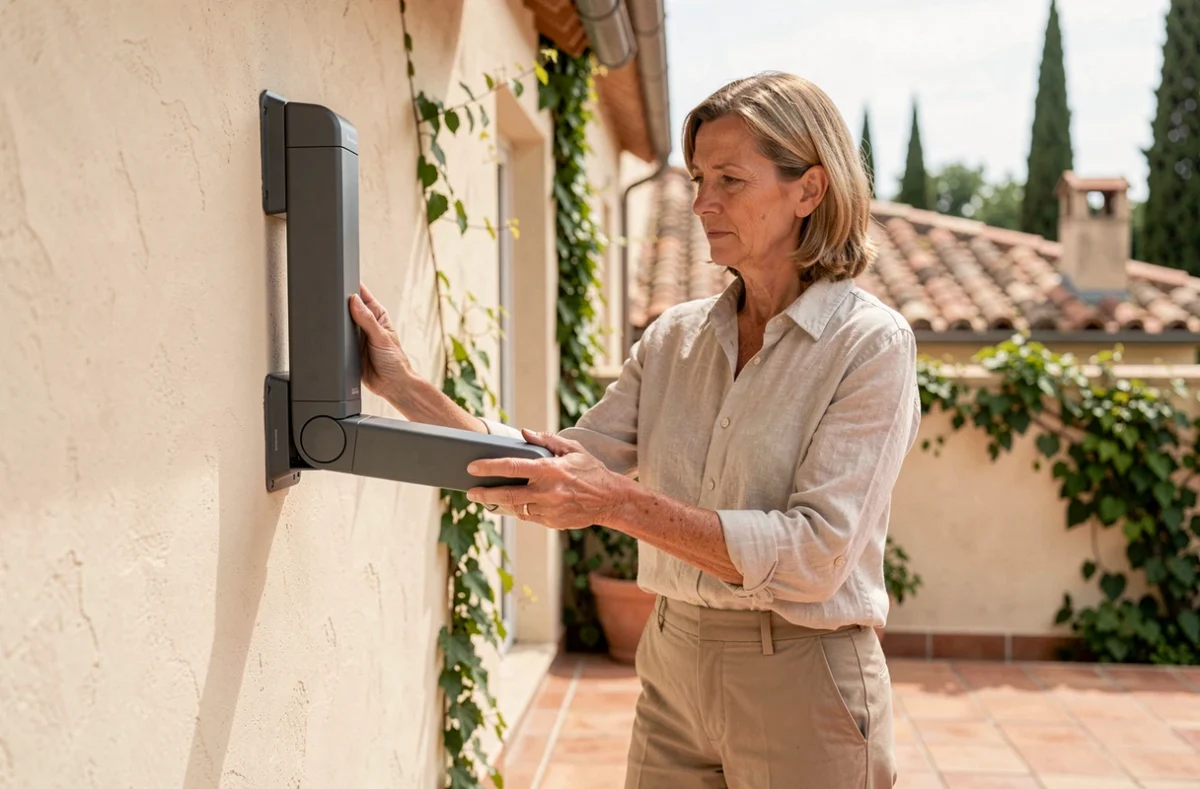
The NF EN 13561 standard classifies awnings according to their wind resistance, from class 0 to class 3. On paper, a high class is reassuring. In practice, the actual hold depends as much on the anchoring as on the awning itself.
An awning class 2 fixed to a hollow block wall with unsuitable anchors will perform worse than a class 1 awning anchored in solid concrete with the right fixings. Dimensions also play a role: the larger the projection, the greater the wind catch, regardless of the classification.
Wind sensor and automatic retraction
On an exposed terrace, a wind sensor that triggers automatic retraction limits damage in case of gusts. It is an investment that significantly extends the life of the awning.
The sensor does not exempt one from respecting the limits of the resistance class. When the wind picks up beyond what the awning can withstand, it must be retracted, sensor or not. Feedback varies on this point: some sensors trigger too early in light winds, others not quickly enough. The sensitivity setting deserves to be tested after installation.
Awnings fabric: choose according to the actual use of the terrace
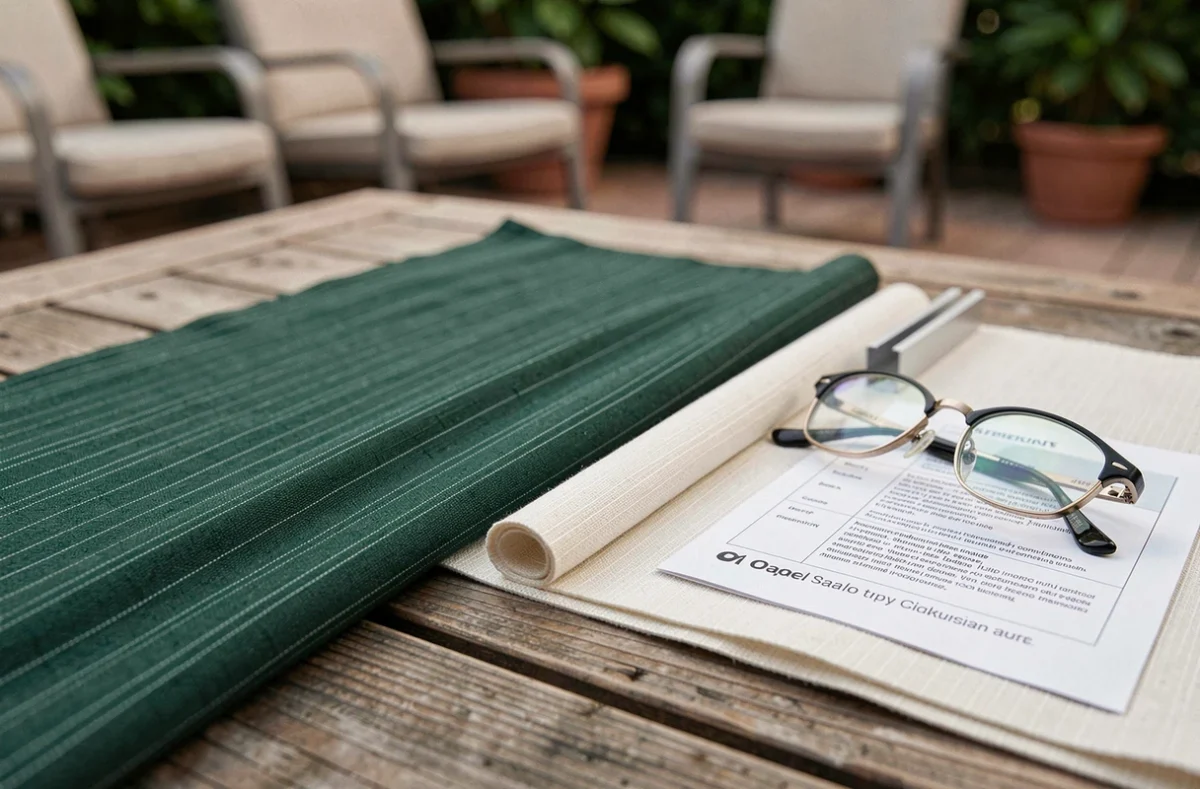
The fabric serves two functions that are often confused: sun protection and durability over time. A mass-dyed acrylic fabric offers good UV resistance and retains its colors for several seasons. A polyester fabric costs less, but its lifespan is significantly shorter in permanent exposure.
The weight of the fabric directly affects solar filtration. The denser it is, the more effective the thermal protection, which reduces the heat transmitted indoors if the awning covers a bay window.
Here are the concrete criteria to check before validating a fabric:
- The anti-mold and water-repellent treatment, especially in humid climates or if the awning remains deployed frequently in mid-season.
- The manufacturer’s warranty on color retention, which provides a reliable indication of the quality of the weaving and dyeing.
- The available width of the fabric, to limit visible seams on large dimensions and maintain a clean aesthetic finish.
Dimensions and projection of the awning: measure before choosing
We often see awnings that are too short, allowing low sun to hit the table in the late afternoon. The width of the awning should exceed that of the area to be shaded by at least a few dozen centimeters on each side, to compensate for the movement of the shadow throughout the day.
The projection determines the depth of shadow cast on the ground. For a deep terrace with a complete garden set, a short projection will only cover a narrow strip near the facade. One should measure the actual usage area, not the total surface of the terrace.
Mounting height and tilt
The height at which the awning is fixed changes the necessary tilt angle. If it is too low, the awning obstructs passage. If it is too high without sufficient tilt, the shadow retreats towards the wall and no longer covers the living area.
It is generally considered that a mounting height of around two and a half meters above the terrace floor offers a good compromise between free passage and shadow projection. The tilt is then adjusted according to the dominant solar orientation.
Full box or monobloc awning: decide between protection and budget
The monobloc awning is the simplest model: the fabric and mechanism remain exposed once retracted. The cost is lower, and installation is quick. In return, the fabric and arms deteriorate faster without protection against the elements.
The full box encloses the entire mechanism when the awning is retracted. The fabric, articulated arms, and winding axis are protected. This is the logical choice if the awning remains in place all year round, including in winter.
Between the two, the semi-box protects the fabric but leaves the arms partially exposed. It is a compromise suitable for terraces sheltered by an overhanging roof or an upper floor.
- Monobloc: tight budget, covered terrace, or awning removed out of season.
- Semi-box: partially sheltered terrace, three-season use.
- Full box: permanent exposure, open terrace, long-term investment.
The awning remains a facade equipment subject to the constraints of the building, climate, and local regulations. Measuring the wall, checking authorizations, and testing the anchoring resistance weigh as much in the success of the project as the choice of color or motor.