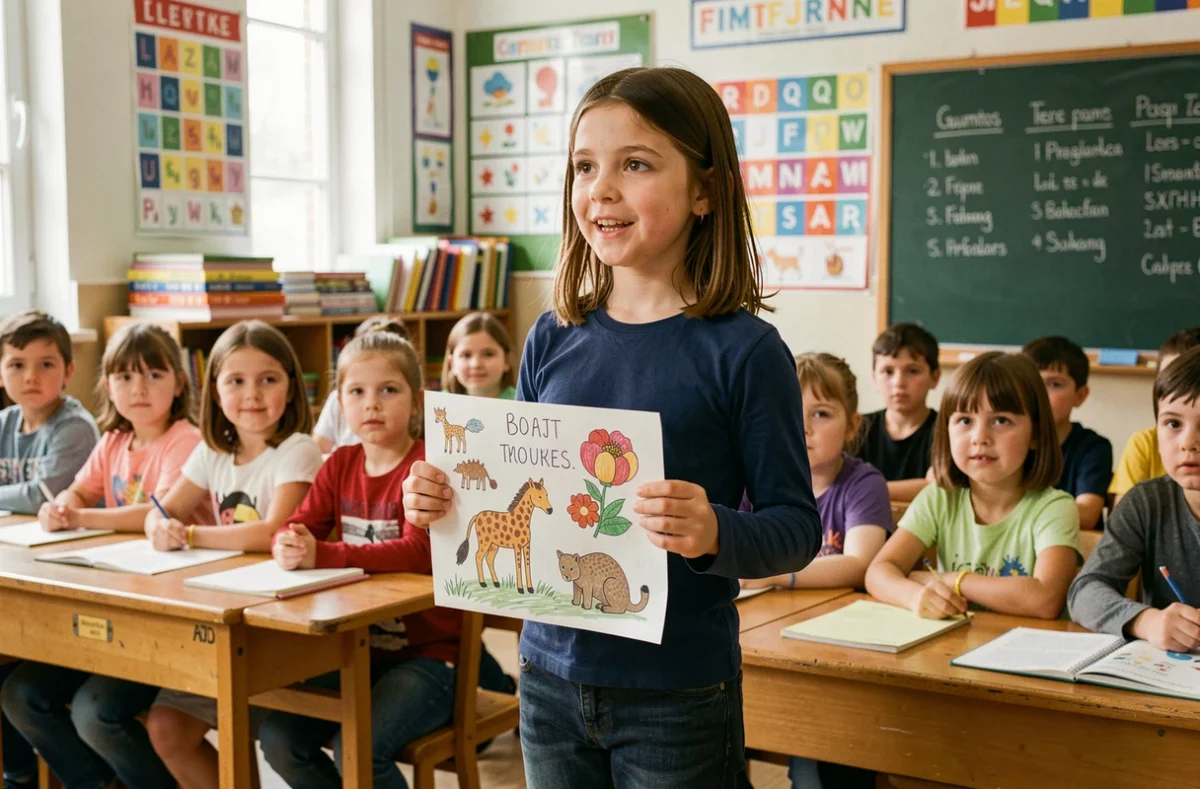
In CM1, oral presentations are among the most valuable exercises in Cycle 3. The curriculum links them to several skills: structuring an argument, finding reliable information, and speaking in front of a group.
Choosing the right topic is a major factor in success, because a theme that motivates the student leads to more in-depth work and a more fluent presentation. The five ideas below were selected for their interdisciplinary potential, the availability of accessible resources, and their ability to spark questions in the classroom.
1. Compare two web pages about the same animal to learn how to verify information
Ministry resources on digital education list critical thinking and digital literacy among the skills to develop from Cycle 3 onward. A presentation built around this idea goes beyond the traditional fact sheet format.
The student chooses an animal (the Eurasian lynx, whale shark, or chameleon), then selects two web pages about it. The task is to identify differences between the two sources: a figure that does not match, a claim without a reference, or a photo with a questionable caption. There are many presentation topics for CM1 related to science or nature, but this one adds a methodological dimension that classmates can apply to their own research.
The presentation becomes more engaging when the student projects the two pages side by side and asks the class to spot inconsistencies before sharing their own conclusions. The topic combines life sciences, media literacy, and oral communication.
2. Explain how artificial intelligence generates an answer
An ÉduNum publication discusses educational uses of AI and the secure framework to prioritize in schools. Turning this topic into a CM1 presentation means asking a simple question: when you type a question into an AI tool, what happens before the answer appears?
The student does not need to know how to program. They can use an analogy: AI has read millions of texts and calculates the most likely next word, a bit like a guessing game on a huge scale. The key point of the presentation is verification: an AI-generated answer can contain errors, so it should be checked against other sources.
This topic grabs students’ attention because most of them have already heard about these tools without understanding how they work. The presentation becomes more concrete if the student shows an example of a correct answer and an incorrect one produced by the same tool, then explains why the machine got it wrong.
3. Tell the story of how a famous bridge was built, combining history, science, and drawing
The Ministry provides guidance for interdisciplinary projects combining science, technology, engineering, the arts, and mathematics from Cycle 1 to Cycle 3. A famous bridge (the Millau Viaduct, the Pont du Gard, or the Golden Gate Bridge) offers exactly this kind of intersection.
The student structures the presentation in three parts:
- The historical context: why the bridge was built, when, and which areas it was designed to connect.
- The engineering challenge: which materials and shape (arch, suspension, or cable-stayed) were used, and what engineering problem the builders had to solve.
- The visual representation: a drawing or labeled diagram created by the student, showing the forces involved (compression and tension) in a simplified way.
Combining several subjects in a single presentation makes it possible to go beyond simply reading an encyclopedia entry. The student learns to connect ideas, and the class discovers that a bridge is not just an engineering feat, but also a structure rooted in a geographical and political context.
4. Present a science experiment live in front of the class
Educational guides on the STEAM approach (science, technology, engineering, the arts, and mathematics) encourage experimentation and creativity from primary school onward. A presentation that includes a hands-on demonstration makes a stronger impression than a slideshow read aloud.
Simple experiments work well in class: comparing the density of liquids (water, oil, and grenadine syrup layered in a glass), quickly germinating lentils on damp cotton prepared a few days in advance, or making an electromagnet with a battery and a nail wrapped in copper wire. The student explains the procedure before carrying out the experiment, then makes a prediction and checks the result in front of their classmates.
The main risk is timing: an experiment that takes more than five minutes to carry out can lose the group’s attention. It is better to choose a short activity and spend the rest of the time explaining the phenomenon observed. The teacher should approve the procedure in advance for safety reasons.
5. Investigate the origins of a local festival or tradition
This topic works because it starts with the student’s everyday life. Rather than covering a national holiday in general terms, the investigation focuses on a tradition specific to the town or region: a patron saint’s day, a carnival, a long-standing market, or a seasonal food custom.
The student conducts research using several types of sources:
- Written documents: municipal archives, local newspaper articles, and the town hall website.
- Oral accounts: a grandparent, neighbor, or shopkeeper who knows the event’s history.
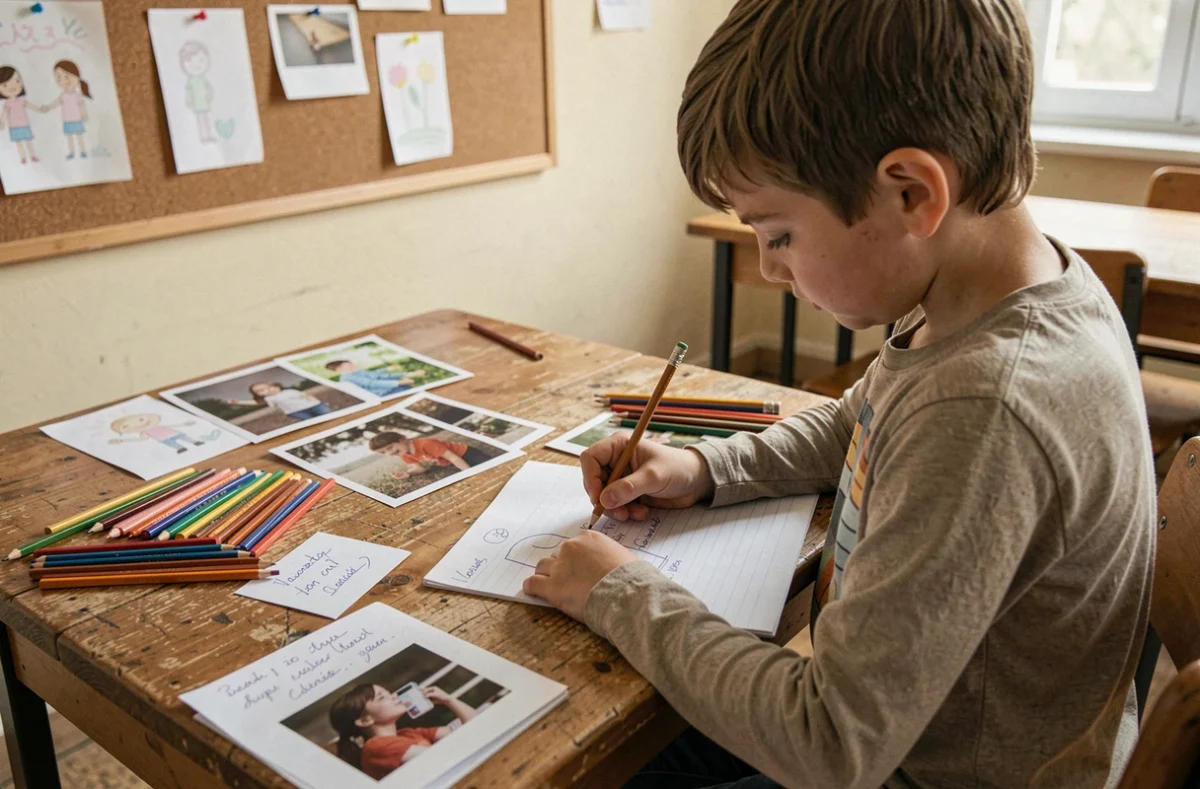
- Direct observation: photos taken at the most recent festival, or a saved poster.
This local investigation format develops skills in EMC (moral and civic education) and history. It teaches students to distinguish a personal memory from a documented fact, connecting with the question of source reliability raised in the first topic. The oral presentation feels more authentic when the student quotes someone they interviewed or shows a photo they took themselves.
These five topics have one thing in common: they ask students to create something (a comparison, an explanation, a diagram, an experiment, or an investigation) rather than recite text found online. This active element is what turns a school assignment into a classroom moment that everyone wants to listen to.