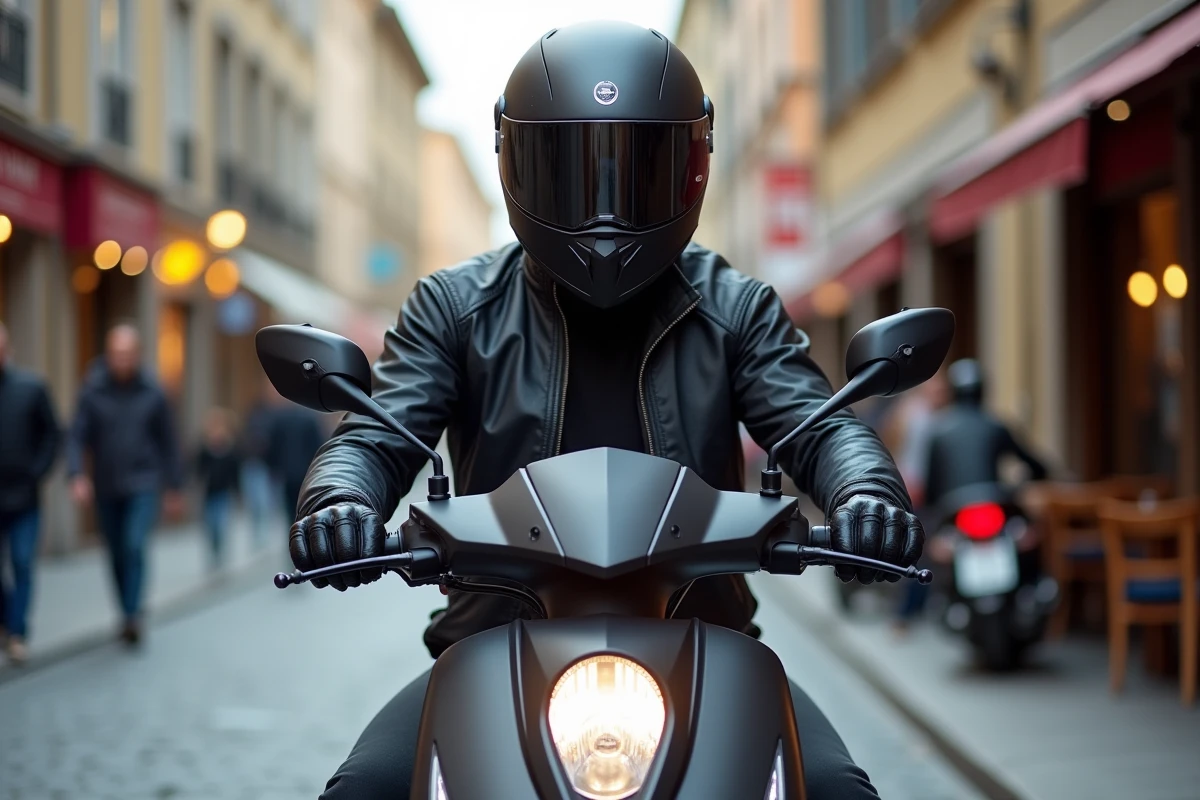
The market for thermal maxi-scooters between 300 and 400 cm³ targets a specific profile: that of the daily urban rider, often a commuter, who also wants to be able to escape the city on weekends. The two engine sizes share a similar size, the same license requirement (A2 or A depending on the models), and a promise of comfort superior to 125 cm³. The differences lie elsewhere, based on criteria that technical specifications do not always highlight.
Euro 5 Standards and Low Emission Zones: the criterion that the technical sheet does not show
Before comparing engine torque and dry weight, a regulatory parameter deserves to be noted. Euro 5 certified scooters, sold from 2020-2021, are currently spared from the most severe restrictions in Low Emission Zones (LEZ). In contrast, older Euro 4 models are already targeted in the scenarios for 2030 developed by several metropolitan areas such as Paris, Lyon, or Grenoble.
For long-term urban use, buying a recent 300 or 400 cm³ Euro 5 certified scooter guarantees a regulatory lifespan significantly longer than that of an older used model, even with equivalent performance. This factor weighs heavily at the time of resale. A scooter that will no longer be allowed to circulate in large urban areas within five years loses a significant part of its value.
Before focusing on engine size, it is essential to check the certification standard. A 300 cm³ Euro 5 will be more relevant in the city than a 400 cm³ Euro 4, regardless of the power difference. A detailed comparison of 300 and 400 scooters allows for cross-referencing these regulatory criteria with the mechanical characteristics of each model.
Engine Power and Weight in the City: What Engine Size Really Changes in Daily Life
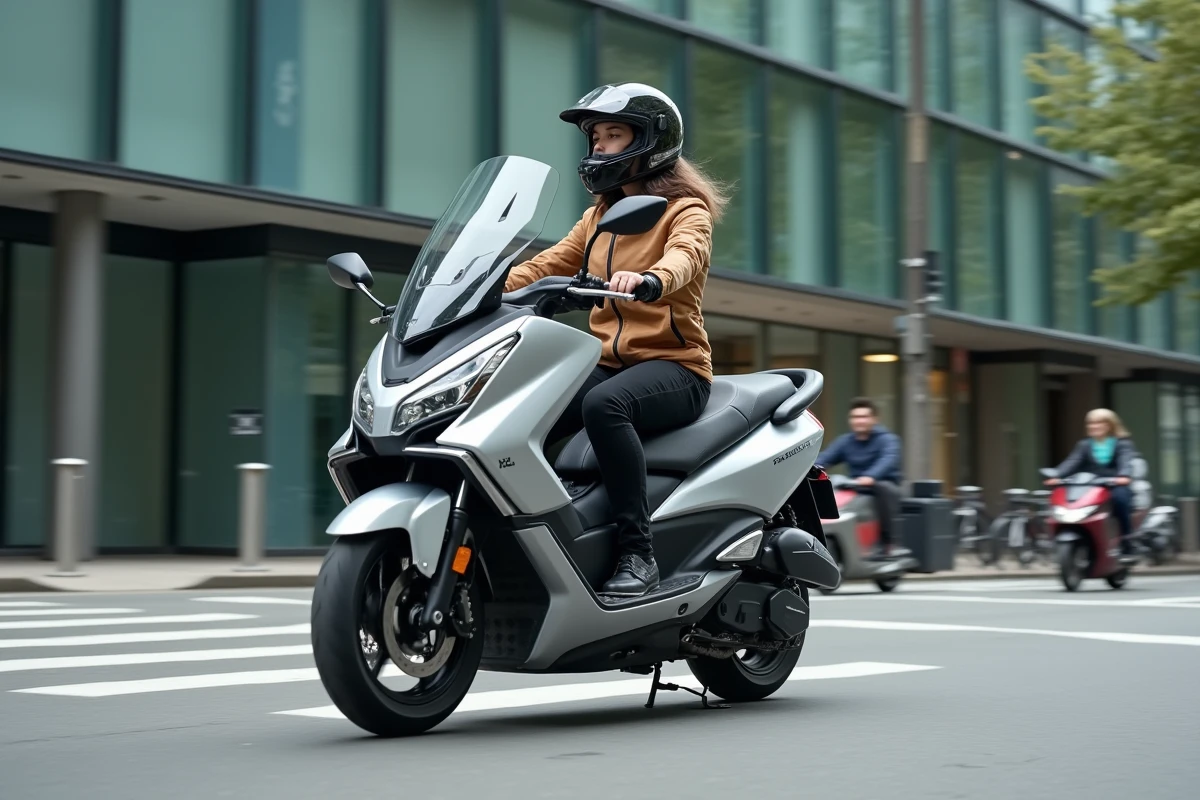
On paper, a 400 cm³ delivers more torque and power than a 300 cm³. In urban practice, this difference is mainly felt in two situations: hill starts and quick merges onto suburban expressways.
For the rest of the urban journey (red lights, slowdowns, parking maneuvers), the extra power of a 400 cm³ is rarely utilized. The additional weight is felt at every stop, every U-turn, every uphill parking. A lighter 300 cm³ weaves through traffic and maneuvers at a standstill with less effort.
The power gain becomes relevant for riders who alternate between urban trips and stretches of fast or ring road. If the daily route regularly includes sections over 100 km/h, the 400 cm³ offers better acceleration and stability at high speeds.
Seat Comfort and Riding Position
Engine size is not the only factor in comfort. Seat height, wheelbase, and seating surface vary significantly from one model to another within the same category. A Yamaha XMAX 300 and a Piaggio Beverly 300 do not offer the same riding position at all, despite having the same engine size.
Urban comfort depends more on the model’s ergonomics than on engine size. Physically testing the scooter remains the only reliable way to assess this aspect, as manufacturer data (seat height in millimeters) does not convey the shape of the seat or the position of the footrests.
Insurance Costs for Urban Use: A Often Underestimated Gap
Choice guides focus on purchase price and fuel consumption, but insurance is a recurring expense that widens the gap over time. Several French two-wheeler insurers indicate in their rates that premiums for a recent 300 cm³ are generally lower than for a 400 cm³ with the same rider profile.
The logic is simple: a larger engine size is associated with higher power, thus a statistically greater risk of costly claims. Solly Azar specifies that engine size and fiscal power are among the primary pricing criteria.
On a comprehensive insurance policy in an urban area, the annual difference can represent a significant amount. Multiplied by the years of ownership of the scooter, this additional cost weighs in the calculation of the overall budget. Here are the items to compare between a 300 and a 400 cm³:
- Annual insurance premium, which generally favors the 300 cm³ with the same profile
- Fuel consumption, slightly higher on a 400 cm³ in mixed use
- Routine maintenance costs (tires, brake pads, belt), often comparable between the two engine sizes but variable depending on the models
- Depreciation at resale, influenced by the Euro standard and local demand for used models
300 or 400 cm³ Scooter for Which Urban Rider Profile
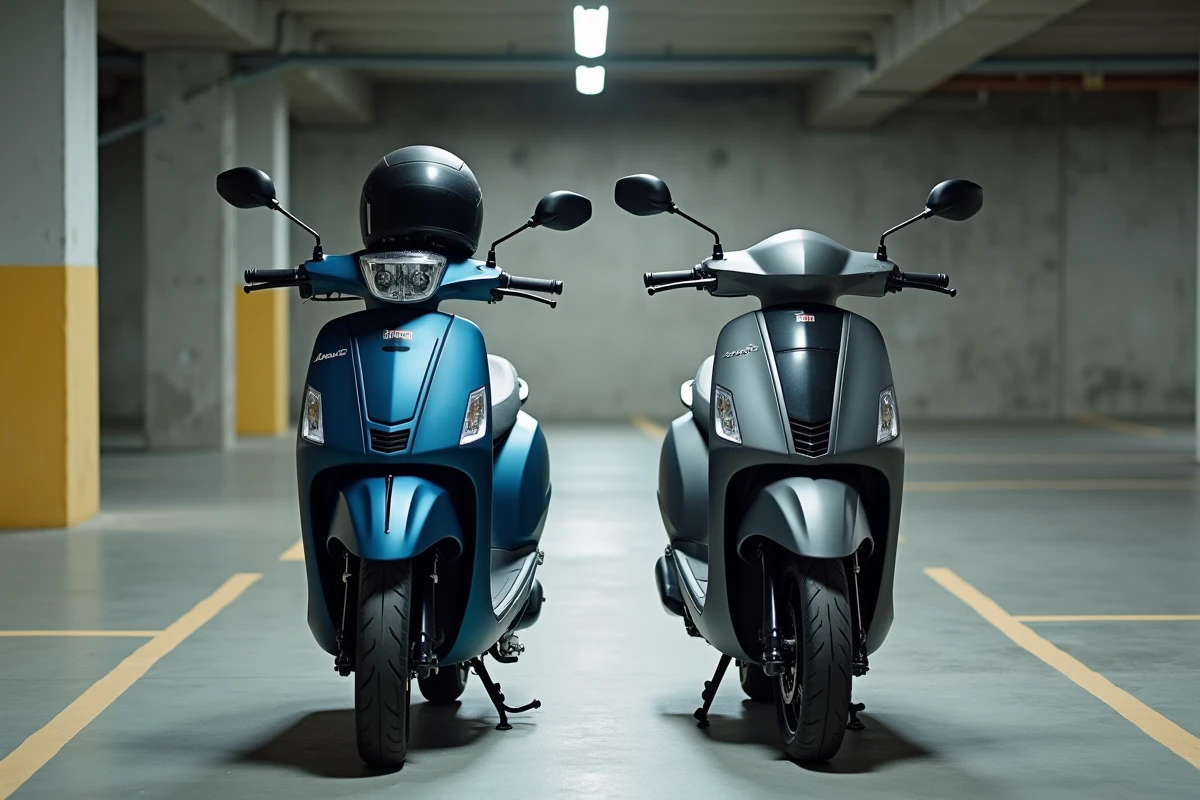
The choice is not limited to a specifications table. It depends on the actual usage profile, not the one one imagines having.
A daily trip of less than 15 km without a fast lane leans towards the 300 cm³. The gain in maneuverability, insurance cost, and ease of parking outweighs the extra power of a 400 cm³ that would never be utilized.
The 400 cm³ is justified for mixed use: city during the week, regular weekend getaways with a passenger or luggage. The additional torque then provides real riding comfort on the road, where a 300 cm³ runs at higher revs to maintain the same speed.
The Case of Reference Models in the Segment
The Yamaha XMAX and TMAX, Piaggio Beverly, and BMW C 400 GT are among the most prominent models in this segment. Each adopts a different philosophy: some prioritize dynamism, while others focus on touring comfort. The choice of model is as important as the choice of engine size.
Field feedback varies on this point, as satisfaction depends as much on the fit between the rider’s size and the scooter’s ergonomics as it does on raw power.
The used market adds a variable. A recent 400 cm³ Euro 5 in good condition can be negotiated at the price of a new 300 cm³. Therefore, the comparison is not only made between new and new, but also by integrating the available offer at the time of purchase, the certification standard, and the expected duration of use in regulated urban areas.