
Choosing a travel destination from the dozens of lists available online often means sifting through the same names: Bali, Iceland, Maldives. The real challenge is not knowing where to go, but finding a place that matches your way of traveling, especially if you have mobility constraints that most guides forget to mention.
Dream Destinations and Accessibility: A Still Under-Documented Angle
The majority of articles on dream destinations presuppose a valid traveler, capable of climbing temples, walking on loose sand, or descending into caves. For travelers with reduced mobility, these same places raise very concrete questions: Is the ground surface navigable in a wheelchair? Do boat transfers have ramps?
Have you ever noticed that destination guides rarely mention the width of sidewalks or the presence of elevators in hotels? This is a documentary blind spot. Some destinations considered “difficult” are actually well-equipped, and vice versa.
Planning an adapted stay requires cross-referencing multiple sources. Platforms like azamivoyage.com help structure this search by grouping offers to various countries, making comparison easier before making a decision.
- Venice after the access ticket: Since the introduction of a paid entry fee in April 2024, the city is less crowded. The wheelchair-accessible walkways installed on the main routes work better when the crowd diminishes.
- Japan, often cited for its stair-step temples, has one of the most accessible rail networks in the world: level platforms, trained staff for assistance, and adapted toilets at every station.
- Costa Rica has invested in accessible trails within several national parks, featuring elevated wooden walkways that traverse the rainforest without requiring walking on rough terrain.
Venice, Bhutan, Antigua Guatemala: Three Destinations Changing Right Now
Rather than listing twenty countries, let’s focus on three destinations where the visiting conditions are evolving significantly.
Venice: Less Crowds, More Authenticity
The New York Times reported in April 2025 on the results of a year of the “access ticket” in Venice. Travelers who have visited recently describe a calmer atmosphere, with the possibility of visiting St. Mark’s Basilica or the Doge’s Palace without being crammed in a line.
The decrease in visitors makes Venice more navigable for wheelchair users, as the adapted walkways and bridges are no longer congested. This is a rarely mentioned collateral effect, but very concrete for those traveling with a physical constraint.
Bhutan: The Tax That Funds Conservation
Since January 2025, Bhutan has imposed a minimum tourist tax aimed at funding environmental conservation. The country attracts clientele that prioritizes “low-carbon” certified stays.
The pace of visiting in Bhutan is slow by nature: moderate altitude in the valleys, vehicle transfers between dzongs (fortress-monasteries), and few mandatory hikes. Bhutan is suitable for travelers who prefer to contemplate rather than hike.
Antigua Guatemala: Enhanced Safety for Solo Female Travelers
Antigua Guatemala benefits from local community programs that have enhanced safety for solo female travelers in recent years. The compact and flat colonial city is easily navigated on foot or by tuk-tuk.
Antigua offers a secure and accessible environment at a lower cost compared to more touristy destinations in Southeast Asia.
Concrete Criteria for Choosing a Destination Suited to Your Profile
Why do some destinations work for one type of traveler and not for another? The answer rarely lies in the landscape. It is based on logistical criteria that sunset photos do not show.
Here are the points to check before booking:
- The local transport network: Are there accessible buses or trains, or must one rely solely on taxis?
- The ground climate: sand, cobblestones, dirt. A wheelchair or stroller does not roll the same way on every surface.
- Medical coverage: Some countries have English or French-speaking clinics in tourist areas, others do not.
- The time zone difference and flight duration: For travelers who tire easily, a journey of more than ten hours without suitable layovers complicates the stay from the start.
A beautiful country on Instagram can become exhausting if these parameters are not anticipated. The best trip is the one that takes your real limits into account, not your brochure dreams.
Accessible Islands and Beaches: Beyond the Postcard Cliché
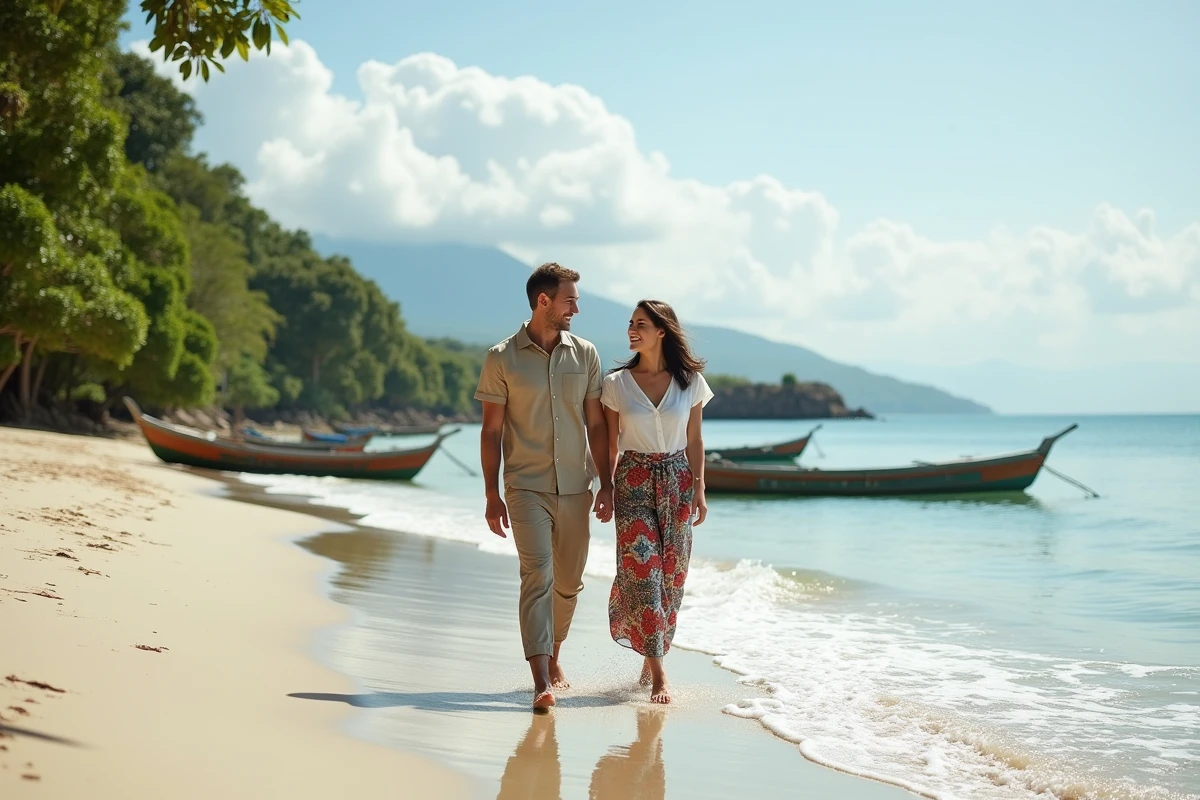
Islands top any list of dream destinations. Bora Bora, the Maldives, the Canary Islands: the landscapes of white sand and turquoise lagoon fuel vacation searches year-round.
In the Canary Islands, a regulatory evolution in 2025 gradually limits direct low-cost charter flights from continental Europe. The goal is to curb tourist urbanization and redirect some of the flows to less saturated islands like La Gomera, which is quieter and better preserved.
La Gomera offers marked trails and rural accommodations that differ from the classic beach experience of Tenerife or Gran Canaria. For travelers with reduced mobility, the paved roads that cross the island allow for discovering the laurisilva (laurel forest) from a vehicle, without hiking.
In the Maldives, most overwater resorts are accessible at ground level from the jetty. The seaplane transfer remains the tricky point: boarding is not always suitable for wheelchairs. Checking this detail before booking avoids an unpleasant surprise upon arrival.
Choosing a dream destination is not just about comparing photos of beaches or lists of monuments. The fit between the place and the traveler’s profile matters more than the postcard. Destinations that invest in accessibility, flow regulation, and visitor safety are the ones that will offer the most lasting memories.