
Doro is a Swedish company founded in 1974, listed on the Stockholm Stock Exchange, with its headquarters in Malmö. It designs mobile phones and smartphones aimed at seniors, but does not manufacture any devices itself. All production relies on an outsourcing model with Asian subcontractors, a strategic choice that shapes both the brand’s pricing competitiveness and industrial vulnerability.
Doro’s Subcontracting Chain: Asian ODMs and Geopolitical Risks
Doro operates as a pure order giver. The brand defines hardware specifications, industrial design, and software layers (simplified interface, emergency button, voice assistance), and then entrusts manufacturing to ODMs (Original Design Manufacturers) based in Southeast Asia and China. This model is common among niche brands that do not have the volume to justify proprietary assembly lines.
For those who want to know everything about the Doro brand, this industrial architecture is the key to understanding. Without its own factory, Doro controls software R&D and the specifications but is entirely dependent on third-party partners for physical production.
The geographical concentration of these subcontractors poses a structural problem. Trade tensions between major powers, logistical disruptions (made visible in the post-Covid period), and local regulatory changes can affect supply timelines and production costs.
For a company whose catalog relies on a few slowly renewed models, a delay of several weeks on a production line is enough to create a stockout across an entire market.

This dependence is not unique to Doro, but it weighs more heavily on a niche player than on a giant like Samsung or Xiaomi, which can redistribute the load among several dozen sites. Doro does not have this flexibility.
Technical Specifications of Doro Devices: What the Specifications Impose on ODMs
The senior positioning imposes design constraints that ODMs must adhere to strictly. A Doro phone is not a generic rebadged smartphone.
On its smartphones, Doro favors a moderately sized screen and a resolution designed for readability rather than pixel density. The clamshell format is still offered on some models, a form factor nearly abandoned by the rest of the market.
RAM and internal storage are sized for use centered on calls, SMS, and a few health applications, with a microSD slot for expansion. 4G connectivity remains the standard, with 5G not yet integrated into the senior catalog.
On the simplest models, the compact format and wide physical buttons are aimed strictly at vocal use. These devices intentionally sacrifice screen size for ease of handling and lightness.
These choices show that Doro drafts a very precise specification document. The ODM assembles according to this plan but has no latitude on interface design or button ergonomics, which are the true intellectual property of the Swedish brand.
European Compliance and EN 301 549 Standard: An Increasing Software Constraint
Doro models launched in the European market must comply with the EN 301 549 standard, which governs digital accessibility requirements. This standard imposes a level of compatibility with assistive technologies (screen readers, voice commands) and minimum display contrasts.
For Doro, this regulatory evolution represents a paradoxical competitive advantage. The brand already designs its interfaces around accessibility. Generalist manufacturers wanting to enter the senior segment must retroactively adapt interfaces designed for a younger audience, which generates ergonomic inconsistencies.
On the other hand, compliance with EN 301 549 increases software development burdens. Doro must maintain proprietary software layers on devices whose hardware is produced by third parties. Each accessibility update must be validated on hardware that Doro does not physically control, which lengthens certification cycles.
Impact on Product Lifecycle
A Doro model generally remains in the catalog longer than a mainstream smartphone. This extended cycle forces the brand to guarantee security and accessibility updates on components whose availability with the subcontractor is not assured beyond a few years. Institutional buyers (nursing homes, communities) should verify the announced software support duration before any large-scale deployment.
Doro’s Industrial Positioning Against Competitors in the Senior Market
The market for senior phones remains fragmented. Doro dominates in Europe, particularly in France, where the brand has built strong recognition among telecom distributors and specialized retailers, ensuring visibility in both physical and online points of sale.
Doro’s uniqueness compared to competitors like Emporia or Swissvoice lies in the vertical integration of software and service. The brand does not just sell a device: it offers an ecosystem (emergency button, family link app, Response by Doro interface) that retains the user and their surroundings.
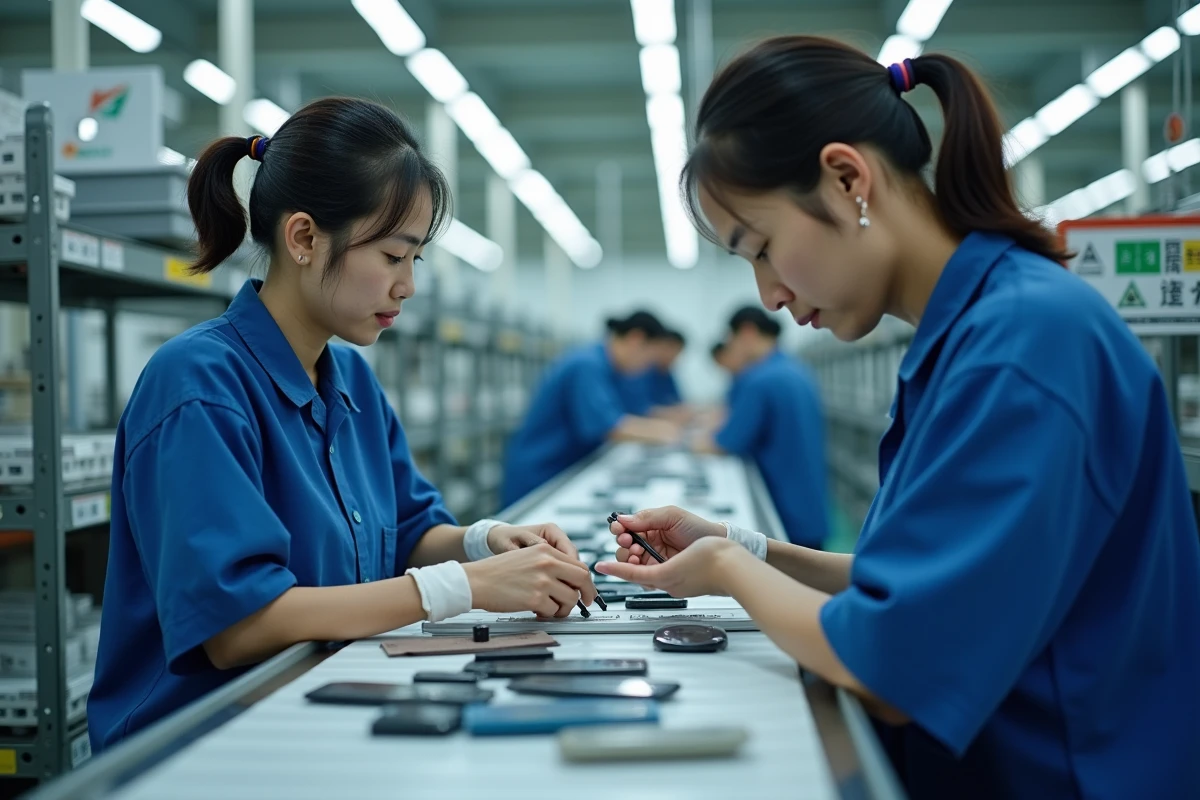
This “outsourced hardware, internalized software” model resembles that of other European brands that have given up physical production to focus on software value addition. The difference is that Doro operates in a segment where hardware reliability is critical: a senior relying on their emergency button cannot tolerate a manufacturing defect related to an uncontrolled change of subcontractor.
This strategic orientation translates into concentrated investment in digital services rather than hardware diversification. Manufacturing remains delegated, quality control centralized in Malmö, and margins are built on software and support. This positioning holds as long as the Asian supply chain remains stable, a bet that the current geopolitical context makes less comfortable than it was ten years ago.