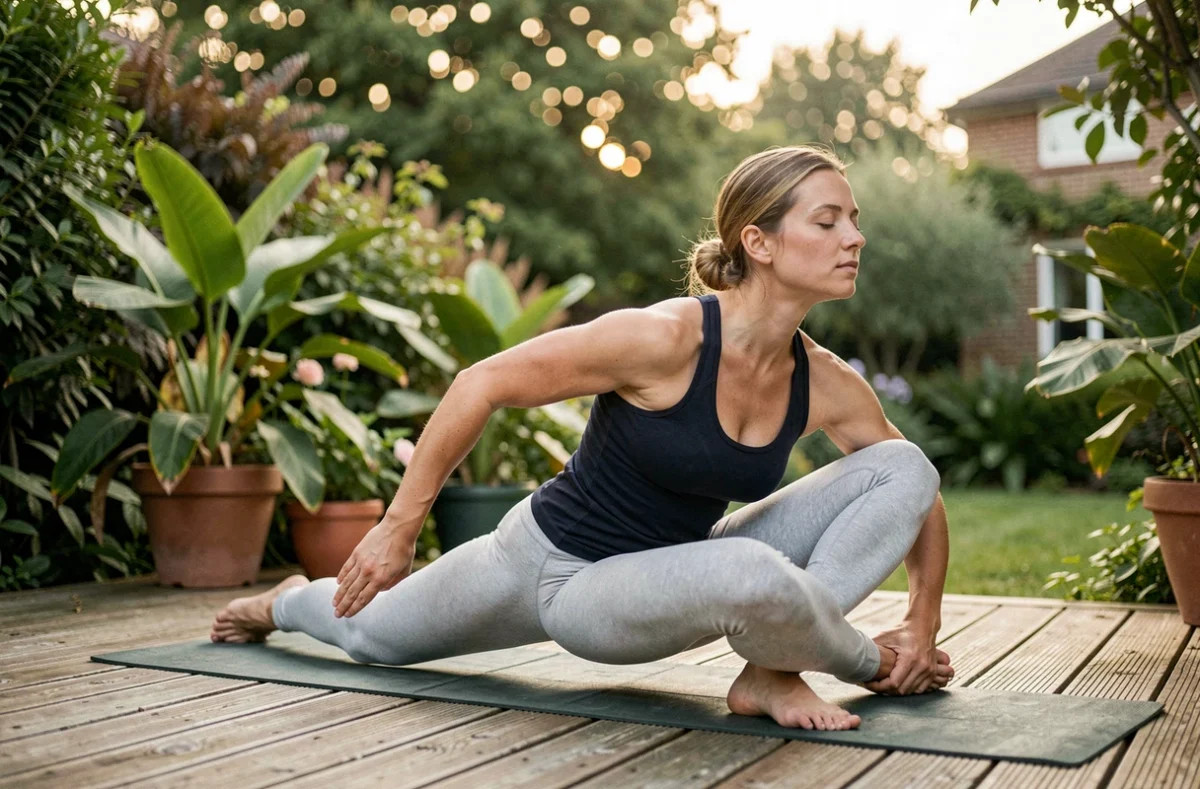
Since 2017, the number of people who exercise regularly and the number of sports licenses issued in France have been rising. This might seem reassuring, but it masks a paradox: time spent sitting is increasing too. Exercising three times a week does not make up for sitting in a chair for eight hours a day. Adopting an active lifestyle means tackling both issues at once.
Sedentary work and limited mobility: why getting moving isn’t just a matter of willpower
Do you sit all day at work and feel guilty about not moving more? The problem isn’t your motivation. Often, it’s your environment that gets in the way.
An office with no room to stretch, a neighborhood without accessible sidewalks, a motor disability that makes walking difficult: barriers to physical activity are primarily structural. Reducing sedentary behavior to a lack of individual discipline means ignoring these realities.
France’s National Sport and Health Strategy 2025–2030, presented in September 2025, acknowledges this gap. It includes recommendations tailored to different ages and living situations, as well as the integration of adapted physical activity into care pathways. The idea is simple: the burden no longer falls solely on the person who needs to move more.
For people with disabilities or those whose jobs require them to remain still, solutions involve adapting their surroundings. A height-adjustable desk, a chair that makes it easy to change position, an accessible walking route between home and work. When the environment makes movement easier, willpower no longer has to be superhuman.
Resources are available to help people find sports and activities suited to different physical or work-related constraints, such as those offered at https://www.sportetica.fr, which combines sport with an ethical approach to well-being.

Everyday movement: what it really does for your health
Taking the stairs, walking during a phone call, getting up every hour to refill a glass of water. These habits are helpful. But it’s important to be clear about what they can and can’t change.
The WHO classifies active travel, household chores, and active leisure as physical activity. All movement counts, even if it’s brief and not part of a sport. A 2024 observational study published in the European Journal of Preventive Cardiology linked higher levels of incidental activity (such as climbing stairs or walking to a store) with lower cardiovascular risk among adults who did not exercise regularly.
This is encouraging, but it doesn’t prove that a short walk cancels out the effects of sitting for several hours. That distinction matters. Small movements are a starting point, not a substitute for more sustained activity.
How to fit active breaks into your day without turning it upside down
You don’t need to overhaul your entire schedule. Three small changes are enough to get started:
- Set an alarm every 50 minutes to stand up, stretch, or walk for 2 minutes down a hallway. Simply breaking up time spent sitting affects blood circulation.
- Replace a short car journey with walking or cycling when the route allows. If your neighborhood isn’t suitable, even getting off the bus or metro one stop earlier can make a difference.
- Pair an active movement with an existing habit: take phone calls standing up, read a document while walking, or do squats while the coffee brews. Habits are easier to establish when they’re attached to an existing routine.
These habits don’t replace exercise, but they do reduce total sedentary time. And it’s precisely this sedentary time—which is distinct from a lack of exercise—that poses a public health problem.
Regular physical activity: choose something you’ll stick with for more than three weeks
Most people who start an exercise program give it up quickly. The problem isn’t exercise itself, but the initial choice.
An activity that’s too intense for your current fitness level can lead to pain and frustration, followed by quitting. You’re more likely to stick with a sport that suits your current fitness level than an “ideal” one that’s too demanding. Brisk walking, gentle swimming, yoga, and cycling at a moderate pace let you make progress without getting injured.
Practical criteria for choosing an activity
Before signing up, it’s worth answering three questions honestly:
- Can I get to the activity from home or work in less than twenty minutes? Any longer, and the journey can become a recurring obstacle.
- Can I still do it during busy weeks, even in a shorter session? A twenty-minute workout is still worthwhile. A modest but regular routine is better than intense, sporadic effort.
- Do I enjoy it at least a little? Enjoyment is the strongest predictor of consistency—not performance or calories burned.

Mental well-being and physical activity: a direct link, but no magic fix
Moving more improves sleep, reduces anxiety, and supports concentration. These effects are well documented and tangible. But physical activity isn’t a universal antidepressant.
Exercise supports mental well-being when it’s part of a balanced lifestyle: enough sleep, a healthy diet, and social connections. Without these factors, its impact remains limited.
The WHO recommends limiting sedentary time alongside taking part in physical activity. This two-pronged approach—moving more and sitting less—has greater benefits than concentrating exercise into just a few sessions each week.
The physical activity that benefits your well-being most is the kind you do regularly, not the kind you plan but never get around to. Walking for thirty minutes five days a week can change your life more than running a marathon once a year. The goal isn’t performance; it’s consistency, in an environment that makes it possible.