A baby’s development cannot be read from a wall calendar. The milestones published in health records indicate averages, not warning thresholds. A child who cannot sit unaided at six months or babble at nine months may still be following a normal developmental path, as long as progress continues.
Variations in baby development: distinguishing an individual pace from a warning sign
The age at which children reach milestones varies widely. Independent walking, for example, may begin well before a child’s first birthday or several months later, without the difference predicting anything about their later motor skills. It is a lack of progress that raises concern, not an isolated delay.
A useful guideline: observe not what your child does compared with a chart, but what they were doing the previous month. If new skills appear regularly (more sustained eye contact, a finer grasp, a wider range of vocalizations), development is moving in a positive direction.
By contrast, losing previously acquired skills (a baby who stops babbling or no longer seeks eye contact) or making no progress for several weeks warrants prompt medical advice. We recommend never postponing this appointment on the grounds that “every child develops at their own pace.” While this is true in most cases, it can also delay the early identification of neurodevelopmental disorders.
To explore these milestones further and find resources organized by age, Pause Bébé’s advice offers a structured starting point covering key motor, language, and emotional milestones.
Free movement and a suitable environment: what parents can really control

Free movement, popularized by the work of Emmi Pikler, is based on a simple principle: let children explore the positions they can get into by themselves. Placing a baby in a sitting position before they can get there on their own may hinder the development of their back muscles and balance.
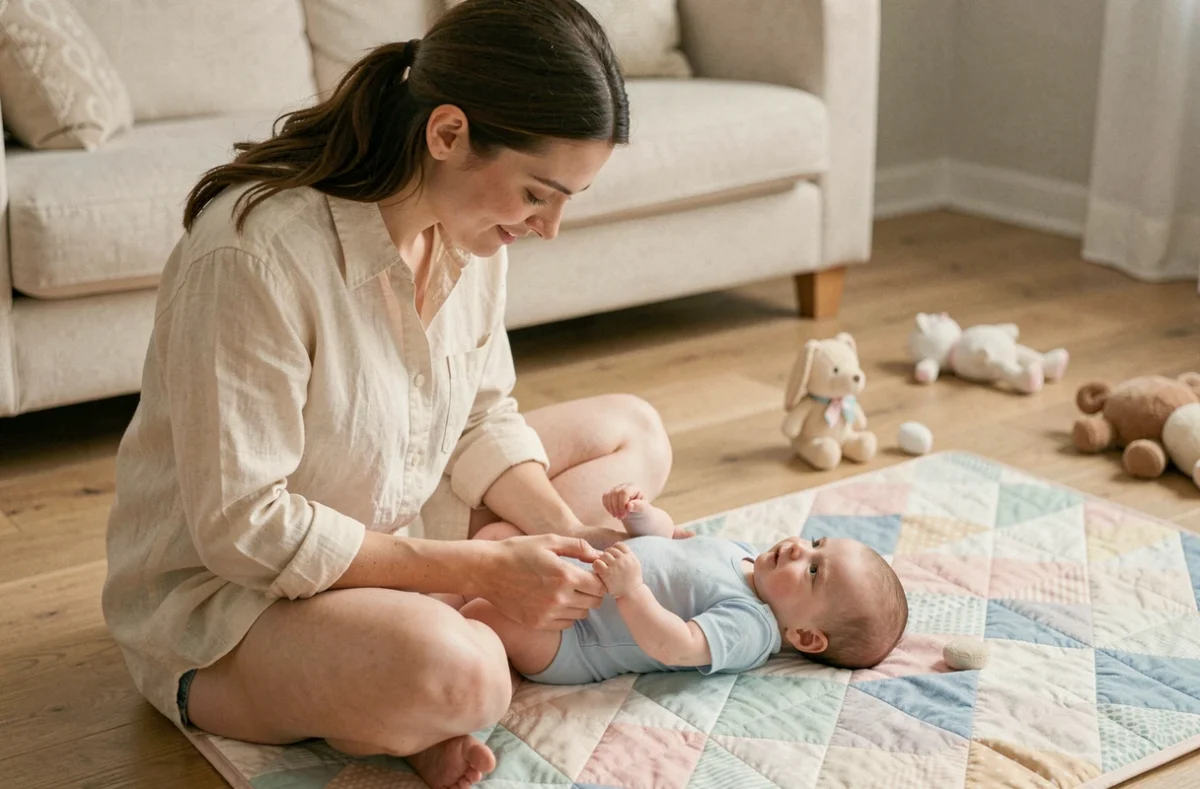
What parents can control is the layout of the space: a firm floor, a mat that is thick enough to cushion but not too soft, and a few objects of different sizes and textures within reach. The child takes it from there.
- Avoid devices that keep babies in one position for extended periods (bouncy seats, walkers, Bumbo seats). They place children in positions they have not reached on their own and limit their postural adjustments.
- Offer simple toys (rings, soft balls, stackable cups) that encourage grasping and hand-eye coordination without overwhelming the senses.
- From the first few weeks, alternate floor time on the back and tummy while staying nearby. This helps strengthen the neck muscles and prepare the baby to roll over.
The environment matters more than directed stimulation. A baby with a safe space and plenty of free floor time will develop their motor skills without needing a packed schedule of structured activities.
Baby language development: spotting the real precursors before the first words
Parents often look forward to the first recognizable word as a language milestone. But the precursors appear much earlier and are more reliable indicators of development.
Vocal turn-taking is a key early marker. By three or four months, a baby who vocalizes, waits for a response, and then vocalizes again is showing that they have grasped the structure of an exchange. This pattern is a better predictor of later language development than babbling on its own.
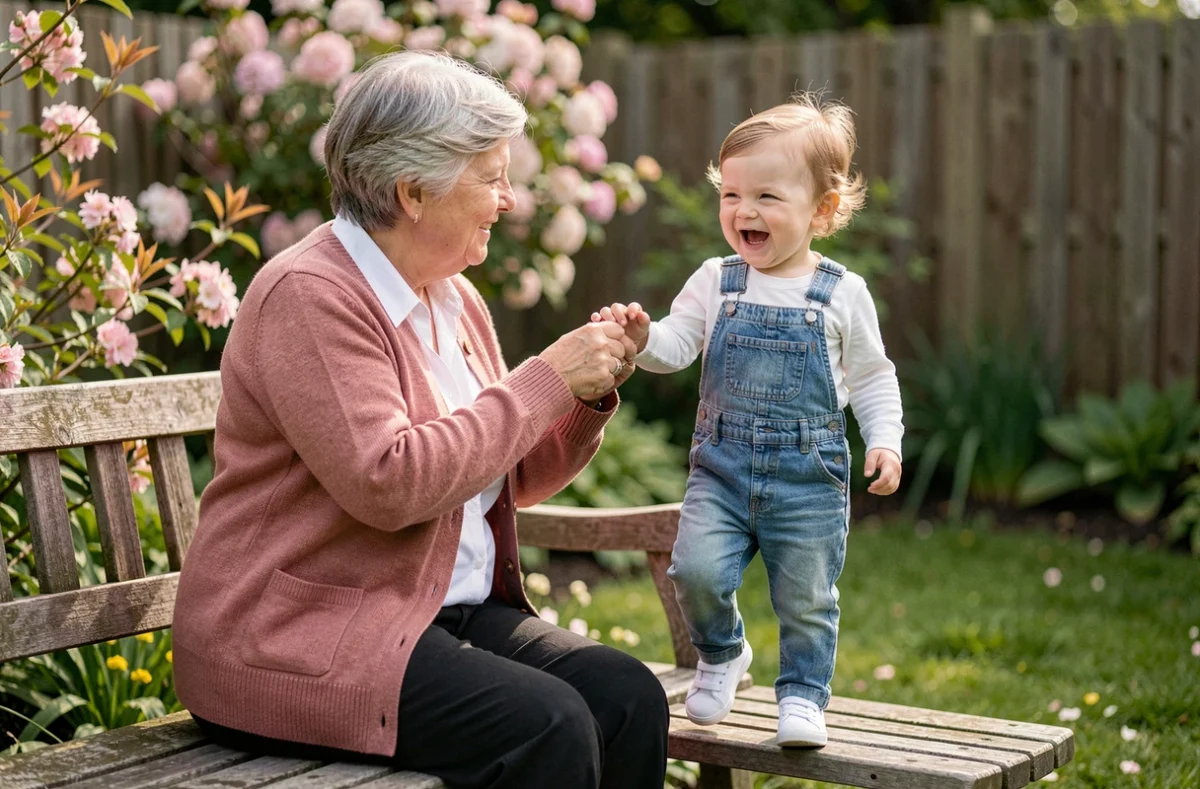
At around eight or nine months, joint attention (following an adult’s gaze or pointing toward an object, then looking back at the adult) shows that the child is connecting communication with intention. If this is still absent after the first birthday, an assessment is warranted.
Everyday ways to support language development:
- Narrate your own actions and your child’s as they happen, using short sentences and a natural pace without oversimplifying.
- Respond to your baby’s vocalizations as if they were a conversation partner: repeat the sound, add a word, and maintain eye contact.
- Read board books with high-contrast pictures—not so your child can “learn” the words, but to create a moment of shared attention and storytelling.
Limiting screen time before age two protects these opportunities for interaction. A screen cannot create turn-taking, which makes it fundamentally different from human interaction when it comes to language development.
Nutrition and health: introducing solid foods without rigid rules
Solid foods are generally introduced around the beginning of the fifth or sixth month, when a child can hold their head steady, shows interest in adult food, and has lost the tongue-thrust reflex. These signs matter more than a specific age.
There is usually no medical reason to delay introducing major allergens (peanuts, eggs, fish, and tree nuts). Current recommendations favor introducing them gradually in small amounts from the start of weaning to encourage immune tolerance.
A child who refuses a new food may need to try it several times—sometimes more than ten—before accepting it. This initial refusal is an adaptive behavior, not a definitive rejection. Forcing a child to eat can create a lasting aversion.
Tracking the growth curve (weight, height, and head circumference) remains the most reliable way to assess nutritional health. Even a modest drop in the growth curve warrants a discussion with the doctor. Otherwise, appetite naturally varies from one meal to the next and is nothing to worry about.
Supporting a child’s development means accepting that you cannot control everything. The parental role focuses on three practical things: providing a suitable physical environment, offering regular and attentive interaction, and staying alert to differences in developmental pace without becoming anxious. The rest is up to the child.