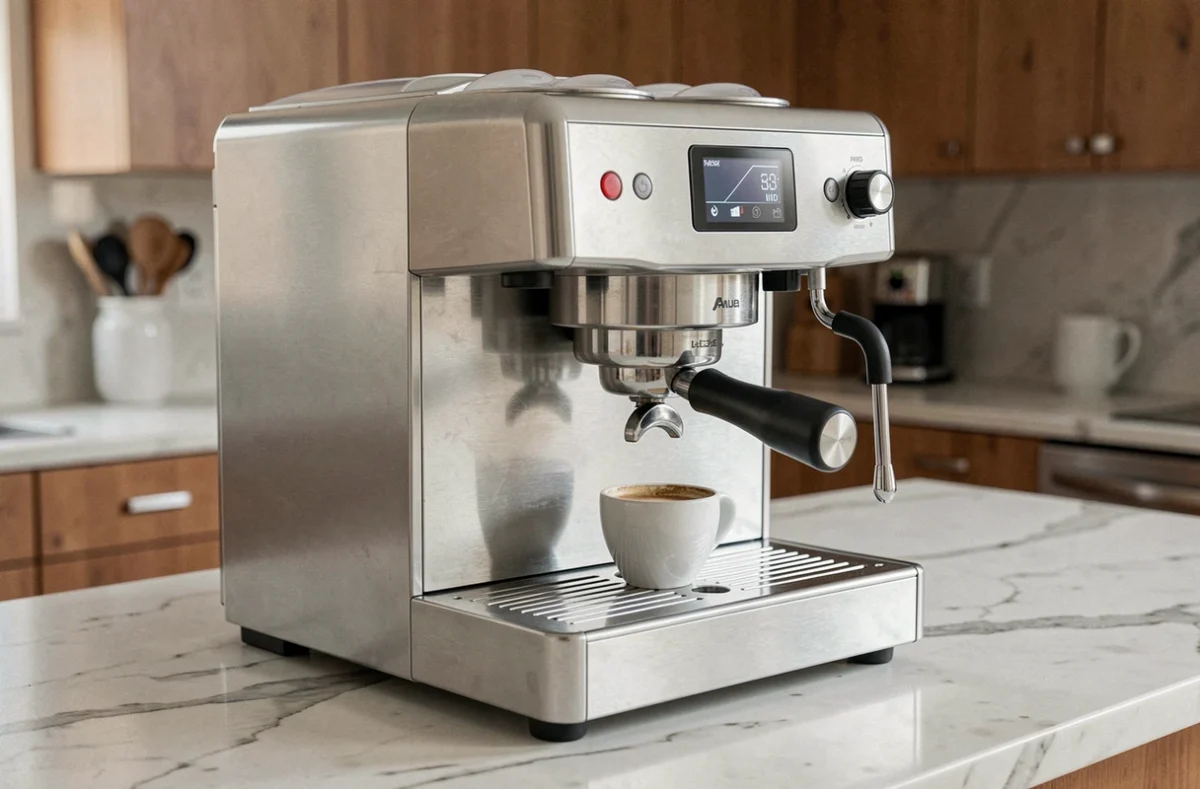
When you make two short espressos in the morning, a long coffee for another member of the household and a cappuccino for a third, the machine runs through cycle after cycle, the grounds container fills up quickly and the water tank is empty before noon. This kind of multi-user routine changes how you choose a coffee machine, going far beyond a simple comparison of technologies.
The real cost and maintenance of an espresso machine used by several people
A household with three or four regular coffee drinkers can easily get through six to eight cups a day. At that rate, the cost per cup becomes the most reliable financial consideration, far more important than the machine’s purchase price.
With capsules, daily costs add up quickly because each drink uses an individual capsule, regardless of the volume you want. A bean-to-cup machine uses whole beans, which cost considerably less per kilo, and the savings add up week after week. You can compare the two options by consulting detailed product pages on https://www.espresshome.com, helping you set a realistic budget before you buy.
Maintenance follows the same volume-based logic. With heavy use, an integrated grinder needs to be cleaned every week. The steam wand, used several times a day for milk-based drinks, can get clogged with milk residue if you don’t flush it after each use. Capsule machines may seem easier to maintain, but the drip tray fills up quickly and descaling is just as frequent.
The right descaler depends on the manufacturer and model. Some brands strongly advise against using white vinegar, which can damage seals or internal components. Before buying, check the manual for the recommended product and its price to avoid an unpleasant recurring expense.

Extraction pressure and grinders: what makes a real espresso
Espresso is defined by high-pressure extraction. The pump forces hot water through a puck of finely ground coffee, producing the golden crema on top and the concentrated aroma on the palate.
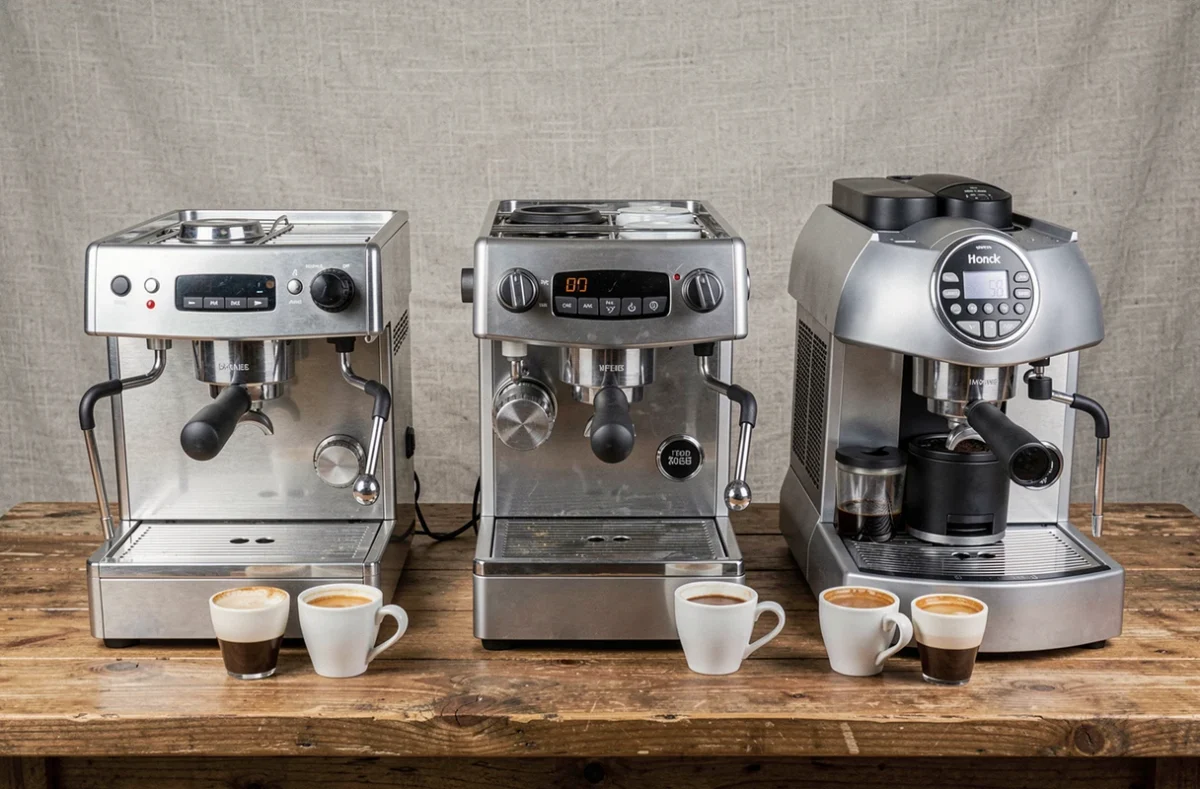
With a portafilter machine, you control the grind, tamping and temperature. The result depends directly on your technique. For a household where everyone wants coffee without spending five minutes at the machine, this type of machine can be impractical—unless one person prepares every cup.
Built-in grinder or separate grinder
Automatic machines with built-in grinders let you adjust the grind size using a dial or screen. Each user can save their own profile (cup size, strength and amount of milk foam). A ceramic grinder is more wear-resistant than a steel grinder over the long term, but both types work well for everyday home use.
A separate grinder offers greater control over grind size, which appeals to discerning coffee lovers. The trade-off is that it takes up extra counter space and adds a manual step between grinding and extraction.
Capsule or bean-to-cup machine: choosing what matters most
Rather than listing every technology, let’s focus on the three factors that really make the difference in everyday use.
- Drink variety: a bean-to-cup machine with a steam wand or automatic milk system can make espresso, lungo, cappuccino and latte macchiato without an external accessory. A capsule machine offers the same variety only if its system includes milk capsules or you add a separate milk frother.
- Preparation time per cup: capsules are hard to beat—around 30 seconds is all it takes. An automatic grinder takes a little longer to grind and extract, and the steam wand adds another step for milk-based drinks.
- Environmental impact: aluminium capsules can be recycled in the yellow recycling bin following the nationwide expansion of sorting guidelines, but local arrangements vary. Checking your local council’s recycling guidelines before assuming a capsule will actually be recycled is a useful habit. Whole beans, on the other hand, produce only compostable coffee grounds.
Power consumption and automatic shut-off: a regulated consideration
It’s easy to overlook, but an espresso machine left in standby all day wastes energy. Automatic shut-off is now covered by European regulations, which require appliances to switch to standby mode or turn off after a set period of inactivity.
Recent models already comply with this requirement. On an older machine, you may need to enable standby mode manually in the settings. If your household uses the machine from morning to evening, setting the automatic shut-off delay to a short interval (around 15 or 20 minutes) can noticeably reduce your annual energy bill.
Repairability and spare parts
Espresso machines are not covered by France’s repairability index, unlike other categories of household appliances. This means you can’t compare models using that rating. Checking the availability of spare parts directly (seals, pump, grinder) and the manufacturer’s warranty period gives you a much more reliable indication of how long the machine is likely to last.
One last point that most guides overlook: how easy it is to access the brew group. On some models, it can be removed in seconds and rinsed under the tap. On others, it’s fixed in place and can only be cleaned using an automatic cycle. When you make several coffees a day for different people, a removable brew group makes weekly maintenance much easier and helps preserve extraction quality, cup after cup.