
In the world of fitness, the importance of targeted bicep work for achieving visible results is undeniable. Yet, despite hours spent in the gym, many complain about not seeing the expected results. Is the key in the intensity of the training, the variety of exercises, or in the consistency of the sessions? Or is it a combination of all these factors? It’s time to explore techniques to optimize bicep training and allow everyone to showcase muscular and well-defined arms.
Bicep Training: The Fundamentals
The basics of bicep training are essential for achieving optimal results. An approach often recommended by fitness professionals is one that includes the ‘dumbbell bicep curl‘. This simple yet effective exercise is a fundamental pillar in building a muscular and toned arm.
The ‘dumbbell bicep curl‘ allows for intense and precise engagement of the two main muscles of the arm: the brachialis and the brachioradialis. It involves a flexion-extension movement at the elbow performed with one or two dumbbells at a time. The exercise can be done standing or seated, depending on your preferences, offering a variety of options that add a dynamic element to your usual routine.
To correctly execute the ‘dumbbell bicep curl‘, start by standing upright with a dumbbell in each hand, palms facing forward. Keeping your shoulders stable, flex your elbows to bring the weights toward your shoulders—as if you were trying to touch them with the dumbbell without moving your torso—then gently lower back down until your arms are fully extended.
There are also several variations in addition to the traditional ‘dumbbell bicep curl’: you can consider an alternating version (one arm after the other), simultaneous (both arms together), or a concentrated version where the elbow is supported on the thigh. Each of these versions has its specific characteristics and can be incorporated based on your personal goals.
However, be cautious when performing the ‘dumbbell bicep curl‘. Using excessive weight can cause injuries and hinder the harmonious development of your biceps. It is better to choose a weight that you can lift safely while maintaining proper technical form.
Coupled with an appropriate diet rich in proteins necessary for muscle growth, the ‘dumbbell bicep curl‘ offers quick and visible results. This training combined with suitable nutrition paves the way for strong and well-defined arms.
In summary, although the ‘dumbbell bicep curl’ may seem simple at first glance, the results are directly linked to its correct execution: choosing the right weight combined with precise execution over a sufficient duration.
Avoid These Mistakes When Training Biceps
You should note that certain mistakes can undermine the effectiveness of your bicep training. To avoid these common pitfalls and maximize your results, here are some valuable tips.
One of the most common mistakes is neglecting the full movement during the flexion-extension of the elbow. It is crucial to bring the weights all the way up to your shoulders while maintaining a good range of motion. Many make the mistake of not fully flexing their elbows or using excessive swinging to lift weights that are too heavy. This greatly limits muscle engagement and can lead to an imbalance between the two arms.
Another common mistake concerns the inappropriate choice of weight. Many tend to overestimate their strength and opt for weights that are too heavy, compromising their technical form. The solution lies in a progressive approach where you gradually increase the load as your strength increases to maintain correct execution without the risk of injury.
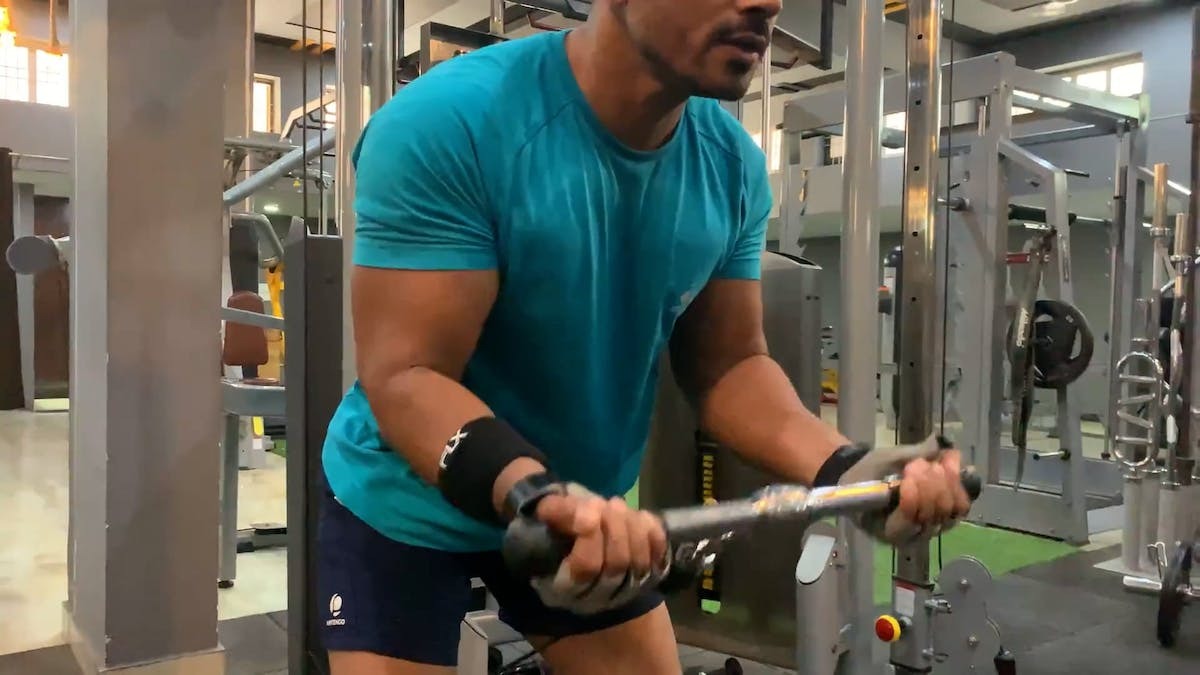
It is also common to pay excessive attention to isolated exercises like the barbell curl or the high pulley curl, neglecting other muscles involved in the harmonious development of the arm. To avoid this, incorporate various compound exercises such as pull-ups or barbell rows to engage your biceps while simultaneously working the adjacent muscles necessary for a cohesive and powerful set.
Another crucial point concerns the timing and frequency of workouts. Some individuals train their biceps every day in hopes of accelerating their development. You must understand that muscles need time to rest and recover in order to rebuild stronger. Ideally, plan one dedicated bicep day per week and include enough rest between your sessions.
Do not neglect nutrition by thinking that simple bicep training will be enough to achieve visible results. A balanced diet rich in proteins, as well as complex carbohydrates and healthy fats, provides the necessary nutrients for muscle growth. Also, ensure you stay properly hydrated throughout the day to promote better muscle recovery.
Maximizing your results when training biceps involves precise technical execution coupled with an appropriate weight. You must avoid mistakes such as incomplete movement, an inappropriate choice of weight, or excessive overexertion. Incorporating compound exercises and proper timing of workouts is also essential. By following these key tips, optimizing bicep training will lead you to visible and lasting results.
Essential Exercises for Developed Biceps
In this section, we will present the essential exercises to effectively develop your biceps and achieve visible results. These targeted exercises will stimulate muscle growth while working on different angles and aspects of the arm muscles.
One of the fundamental exercises for bicep development is the barbell curl. This exercise can be performed standing or seated, using a straight bar or a curved EZ bar to reduce wrist tension. The goal is to flex the forearms while keeping the elbows stationary. You should engage your shoulders during this exercise to fully engage the biceps.
Another must-do exercise is the incline dumbbell curl. Lying on an incline bench at about 45 degrees, you perform a simultaneous flexion of both arms, without swinging or cheating with your body. This specific incline allows for better isolation of the bicep muscles and maximizes their contraction.
To add variety to your training, also incorporate the concentration curl, often referred to as ‘Popeye curl’. Sit on a bench with a dumbbell in one hand and place your inner elbow against your corresponding thigh. Keeping your arm steady, slowly flex the forearm toward the shoulder while intensely contracting the bicep. This exercise specifically targets muscle fibers, promoting their development.
Don’t forget pull-ups, which are also beneficial for strengthening and thickening your biceps. Using a fixed bar or suspension straps, grasp the bar with an underhand grip (palms facing you) and pull yourself up until your chin is above the bar. This will engage not only your biceps but also your back muscles, creating a harmonious set.
You should work on your biceps while ensuring that you execute each movement with good technical form. Start by choosing an appropriate weight for each exercise to maintain intensity without compromising your execution. Also, vary the loads and repetitions to continuously stimulate your muscles and avoid stagnation.
These essential exercises will allow you to effectively develop your biceps while working on different muscular aspects necessary for a visible and harmonious result. Don’t hesitate to consult a fitness professional or personal trainer if you need additional help adapting these exercises to your level or customizing your training program.
Advanced Techniques for Growing Biceps
In this section, we will explore advanced techniques that will help you maximize bicep growth and achieve visible results. These methods are ideal for individuals who already have some experience in training and wish to push their limits even further.
The first technique we recommend is the ‘superset’. This method involves chaining two different exercises together without rest in between. For example, you can do a set of dumbbell curls followed immediately by a set of pull-ups. This intensifies your workout by working the arm muscles from different angles and increasing muscle fatigue.
Another interesting technique is the ‘drop set’. After reaching muscle fatigue on a given exercise, immediately reduce the load and continue performing the movement until complete muscle exhaustion. For example, if you are doing curls with a straight bar, start with a heavy load and then gradually decrease the weight after each set until you can no longer perform a single repetition correctly. This allows for greater recruitment of muscle fibers and thus promotes optimal bicep growth.
For those looking to add extra intensity to their training, eccentric supersets can be very effective. The eccentric focuses on the downward phase of the movement where the muscles contract while being simultaneously stretched. Therefore, perform this phase slowly and control your movement. For example, during dumbbell curls, focus on the descent of the dumbbell rather than the upward phase.
Don’t forget to include isometric exercises in your routine. Isometry involves maintaining a muscle contraction without changing the length of the muscle. You can perform ‘spider curls’ using an incline bench where you hold the position for a few seconds while intensely contracting your biceps before slowly releasing the movement.
It is important to note that these advanced techniques should be used with caution and moderation to avoid injuries. Proper execution technique remains essential for optimal results while minimizing potential risks.
Advanced techniques such as supersets, drop sets, eccentric training, and isometric exercises can be very effective for maximizing bicep growth. They require prior mastery of the basics and a gradual adaptation as you progress in your training. Don’t hesitate to consult a qualified professional who can guide you in the appropriate use of these methods to optimize your visible results while preserving your muscle health.
Key Nutrition to Optimize Bicep Training
In the world of fitness, the importance of nutrition in optimizing bicep training cannot be underestimated. A proper diet provides the essential nutrients necessary for muscle growth and recovery after intense training.
To start, be sure to integrate complex carbohydrates into your diet to provide the energy needed during your intense training sessions. Whole grains, sweet potatoes, and legumes are excellent sources of carbohydrates that will help you maintain your energy levels throughout your workouts.
Healthy fats such as those found in avocados, nuts, and seeds are also important as they help regulate hormonal metabolism, which plays a key role in muscle growth.
In addition to the previously mentioned macronutrients, pay particular attention to essential micronutrients such as vitamins and minerals. These contribute to various metabolic processes and play a key role in muscle recovery. Colorful fruits and vegetables are excellent sources of vitamins and minerals.
Also, emphasize that a balanced diet should be paired with proper meal timing to optimize digestion and effective nutrient absorption.
To achieve visible results in your bicep training, it is crucial to pay particular attention to your nutrition. A diet rich in lean proteins, complex carbohydrates, healthy fats, as well as vitamins and minerals will promote muscle growth while improving your physical performance. Don’t forget to stay well-hydrated throughout your training sessions.
Bicep Training: Tips to Avoid Injuries
When embarking on an intensive bicep training, it is important to take certain precautions to avoid injuries and thus maximize your results. Here are some tips that will help you maintain your physical integrity during your training sessions.
Make sure to warm up properly before each workout. A good warm-up increases body temperature, prepares the muscles and joints for effort, which significantly reduces the risk of injury. Perform dynamic stretching exercises specific to the biceps, such as wrist rotations or arm flexion-extensions.
Be sure to adopt proper technique when executing exercises targeting the biceps. Poor form can lead to unnecessary strain on the joints and cause pain or even injuries. Seek advice from a qualified professional or ask a personal trainer to check your posture and movement to correct any potential errors.
Another important tip is not to overestimate your physical abilities by increasing the weight lifted too quickly during bicep exercises. It is crucial to have a gradual progression in terms of intensity so that your muscles can adapt progressively to the stresses imposed by the exercise while minimizing the potential risk of muscle injuries.
Pay particular attention to rest between your training sessions. Recovery time is essential for allowing your muscles to rebuild and strengthen after intense training. Remember that overtraining can lead to injuries due to excessive fatigue.
Optimizing your bicep training should not come at the expense of your health and physical integrity. By following these simple yet effective tips, you will be able to avoid common injuries associated with this exercise while maximizing your muscle performance. Take care of yourself, listen to your body, and don’t hesitate to consult a professional if necessary to achieve visible results without compromising your overall well-being.