
The lilies have finished their show, the last petals litter the ground, and one question comes up every summer: should we take the bulbs out of the ground or leave them alone? The short answer is that most lily bulbs benefit from staying in place. But this answer deserves some nuances because the type of soil, the climate, and the health of the bulb change everything.
Bulbs of lilies without tunic: why digging them up is problematic
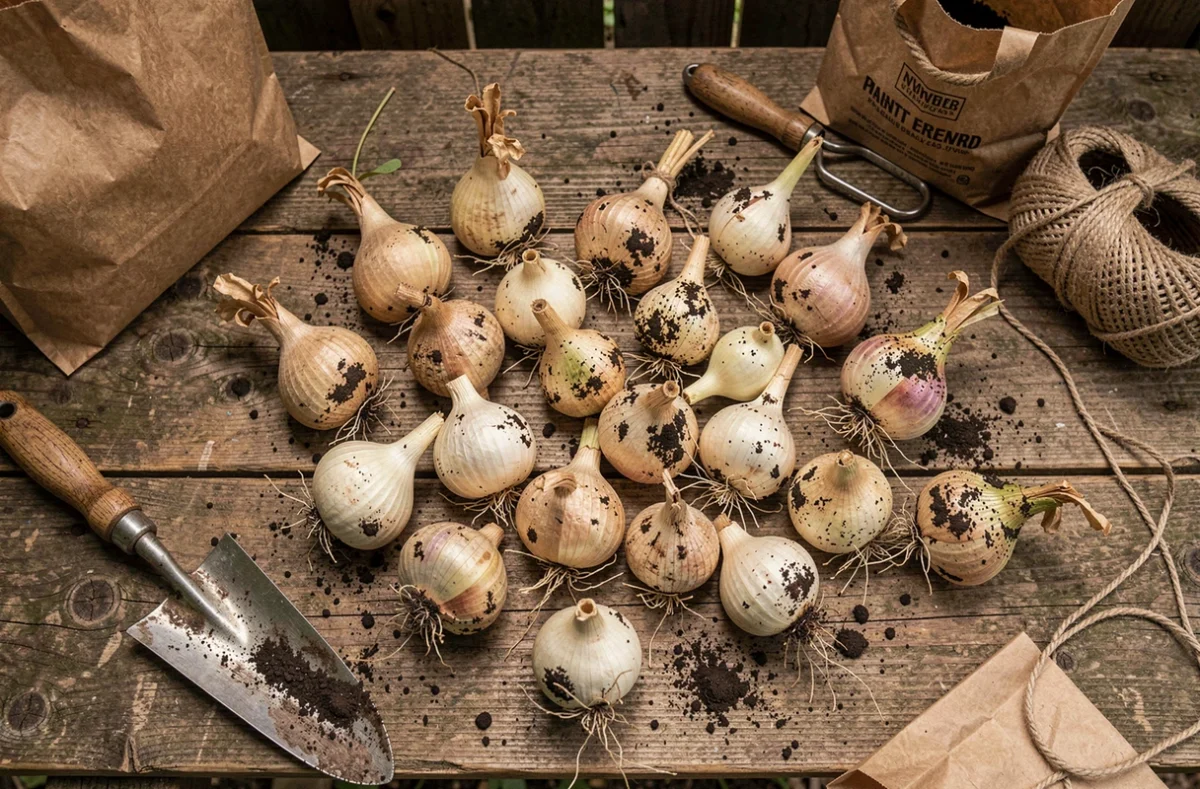
Have you ever noticed that a tulip bulb is covered with a brown skin, somewhat like an onion? The lily, however, does not have this protective covering. Its fleshy scales are directly exposed to the air.
This peculiarity has a direct consequence: a lily bulb stored bare dries out quickly. While a tulip can withstand several weeks in a net in the garage, a lily risks losing all its vitality in just a few days without moist substrate around it.
Specifically, if you pull up a lily bulb, you need to plunge it back into a barely moist mix (potting soil, vermiculite, or peat) and keep it cool, frost-free. It’s not complicated, but it’s a constraint that many gardeners underestimate. To delve deeper into this topic, you will find gardening tips on L’Atelier du Bricolage that detail the question of storage well.
In summary, systematic digging exposes the bulb to unnecessary stress. It’s better reserved for situations that truly justify it.
Soggy soil, exposed pot, tender species: when to dig up your lilies
Lilies are generally hardy. Most common varieties (Asian lilies, trumpet lilies) get through the winter without a hitch in the ground. Digging becomes relevant in three specific cases.
A soil that retains too much water in winter
The worst enemy of the lily bulb is not the cold, but stagnant moisture. Clay soil that remains soaked for weeks encourages basal rot. Improving drainage is often more effective than digging up. Adding gravel or coarse sand to the bottom of the planting hole is sufficient in many cases.
Lilies grown in pots
In pots, the substrate stays wet longer after autumn rains. The roots lack space to escape the excess water. Two options: bring the pot indoors to a cool, dry place, or dig up the bulbs to store them in a controlled substrate.
Less hardy varieties
Some oriental lilies or recent hybrids do not tolerate harsh winters well. If your region experiences prolonged frosts and the variety is not known for its hardiness, digging up after the vegetative rest remains a reasonable precaution.
Lily foliage after flowering: the action many take too early
Once the flowers have faded, the reflex is to cut everything back to “clean up.” This is a common mistake that weakens the bulb for the next season.
After flowering, the foliage continues to nourish the bulb through photosynthesis. The leaves capture light and transform this energy into reserves stored in the scales. Cutting the stems and still-green foliage deprives the bulb of its supply.
Here’s what to do, in order:
- Only remove the faded flowers to prevent seed formation, which unnecessarily exhausts the bulb. Cut the stem just below the last flower, no lower.
- Leave the foliage in place until it completely yellows and dries up on its own. This phase lasts several weeks after the end of flowering.
- Cut the stem at ground level once all the foliage is dry. At this stage, the bulb has finished its storage and enters dormancy.
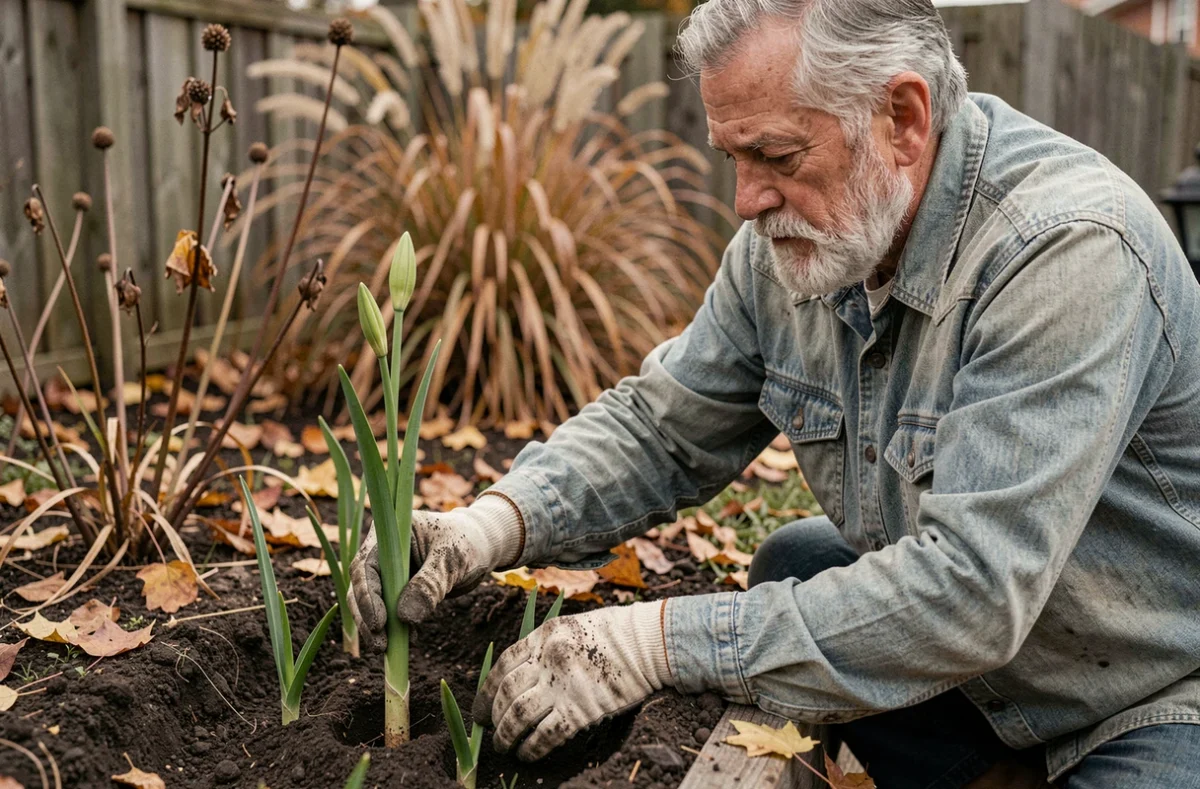
This timeline applies to both lilies in the ground and those in pots. Patience pays off: a well-recharged bulb produces sturdier stems and more flowers the following year.
Disease and virus: when the bulb must be eliminated, not replanted
Digging sometimes has another purpose: to inspect the health of the bulb. Before replanting or storing, a few checks are necessary.
A brown, soft, or crumbling base indicates basal rot. There is no reliable curative treatment for this disease. The affected bulb must be discarded (not composted) to prevent contamination of neighboring bulbs.
Leaves marbled with yellow or flowers streaked and deformed may indicate a virus. In this case, the entire plant must be removed and destroyed. Bulbils from an infected bulb retain the virus: replanting them would only spread the problem.
Two signals that should alert you:
- Soft or brownish scales to the touch, accompanied by an unpleasant odor, indicate an advanced fungal infection.
- Marbled foliage associated with abnormal flowering (deformed petals, unusual colors) suggests a viral disease transmitted by aphids.
A healthy bulb is firm, white or cream, with tightly packed scales. If you handle your bulbs, take the opportunity to discard those showing the slightest sign of degradation.
Division of lily bulbs: the right time to multiply
After a few years in the ground, a lily bulb produces bulbils (small secondary bulbs) at its base. The clump becomes dense, the stems thin out, and flowering decreases. This is a sign that division would be beneficial.
Division is done after the vegetative rest, once the foliage has completely dried. In practice, this often falls at the end of summer or the beginning of autumn. Gently dig up the clump, separate the bulbils from the mother bulb, and then immediately replant each element in well-drained soil, at a depth equivalent to two to three times the height of the bulb.
Bulbils generally take one to two seasons before flowering. In the meantime, they develop their root system and grow larger. This is the simplest method to thicken a lily bed without buying anything.
Annual digging of lily bulbs is more of an inherited reflex than a horticultural necessity. In well-drained soil, with foliage left to yellow quietly and occasional health inspections, most lilies will come back by themselves the following summer, often with more flowers than before.