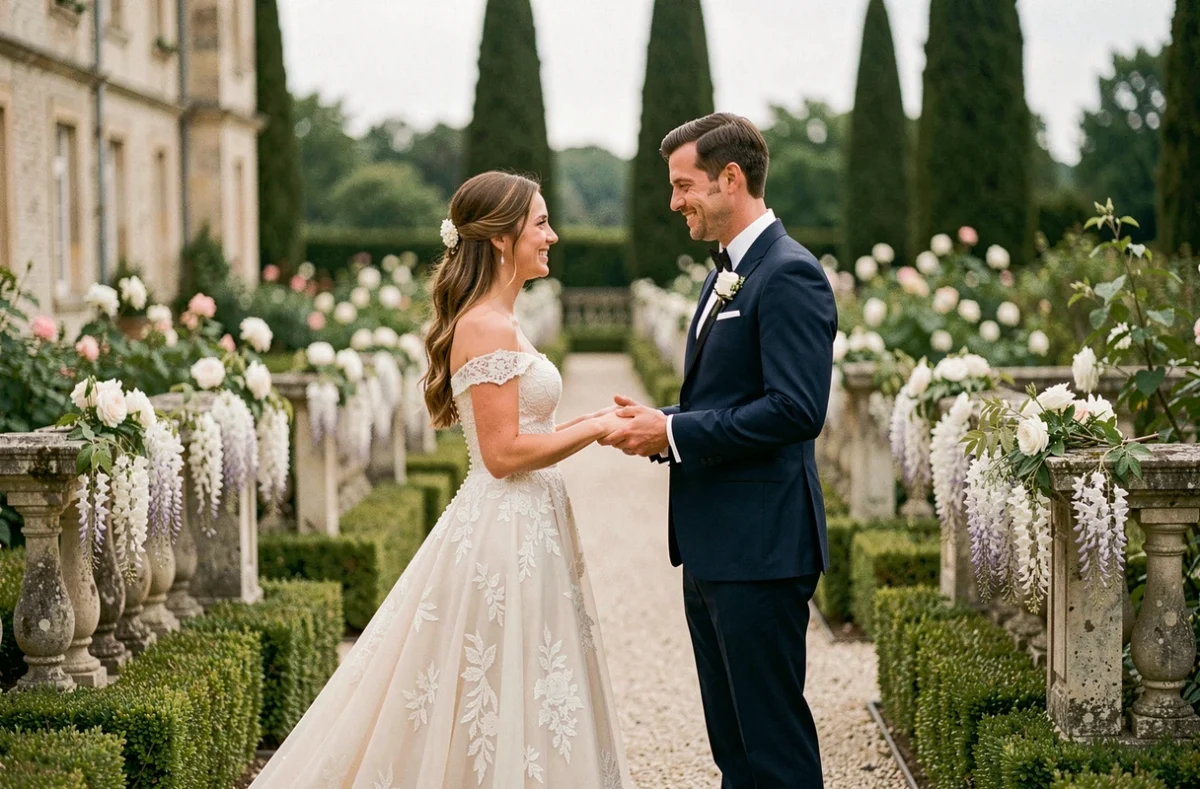
A wedding in 2024 is characterized by a clear shift in priorities: the personalization of each step takes precedence over adhering to a unique model. Couples weigh options between a short format or a long weekend, between a secular ceremony and the obligatory visit to the town hall, between local decoration and a bold color palette. Understanding these axes allows for the construction of a coherent project rather than a patchwork of decorative ideas.
Secular Ceremony and Civil Wedding: What the Law Requires Before Any Inspiration
In France, only the celebration by a civil officer produces a legal effect. A religious or secular ceremony cannot precede the civil marriage. This constraint structures the entire day’s schedule, especially when the reception venue is far from the town hall.
The secular ceremony is not a regulated profession. No official accreditation is required to act as an officiant. The service falls under a standard service contract, which means that the responsibility for verifying certain points rests entirely with the couple.
- Replacement clause in case of the officiant’s unavailability, rarely offered spontaneously in quotes
- Intellectual property of the ceremony text: specify whether the couple can keep or distribute it
- Timing coordination with the town hall, especially if the civil ceremony and the secular ceremony take place on the same day
- Cancellation and refund conditions, based on a service contract
These contractual details are systematically absent from inspirational articles. Yet they condition the feasibility of the project. To discover Mon Beau Mariage online, it is enough to cross these practical aspects with decorative ideas to obtain a realistic day plan.
Multi-Day Weddings: Format and Logistical Constraints
The model of a unique Saturday night is evolving towards longer stays. The typical format includes an informal dinner the night before, the ceremony and reception on the main day, followed by a brunch or activity the next day. This experiential format over two or three days transforms the wedding into a shared stay.
This trend has direct consequences on the budget and organization. The reception venue must offer accommodation or be located near sufficient housing. Catering goes from one to three meals. The coordination schedule lengthens proportionally.
Welcome Bags and Guest Reception
The welcome the night before often comes with welcome bags given to each guest or couple. The contents vary, but the logic remains the same: to provide a practical kit (weekend program, local products, venue map) that replaces the traditional mass booklet or simple welcome signage.
The welcome bag serves both an organizational and decorative function. It reduces the number of practical questions on the day itself and allows for the integration of personalized elements that set the tone for the weekend upon arrival.
2024 Color Palette: Beyond Pastels
The dominant palettes of the year move away from the powdery tones that marked previous weddings. Warm and saturated colors take over: carmine red, sienna, lemon yellow, hazelnut brown. Cobalt blue also appears as a strong shade, often used in signage, furniture, or floral arrangements.
Peach Fuzz, the Pantone color of the year, offers a soft yet distinct alternative to classic powder pink. Its appeal lies in its ability to pair with more intense tones without creating a visual break.
Applying a Cohesive Palette Without Overloading
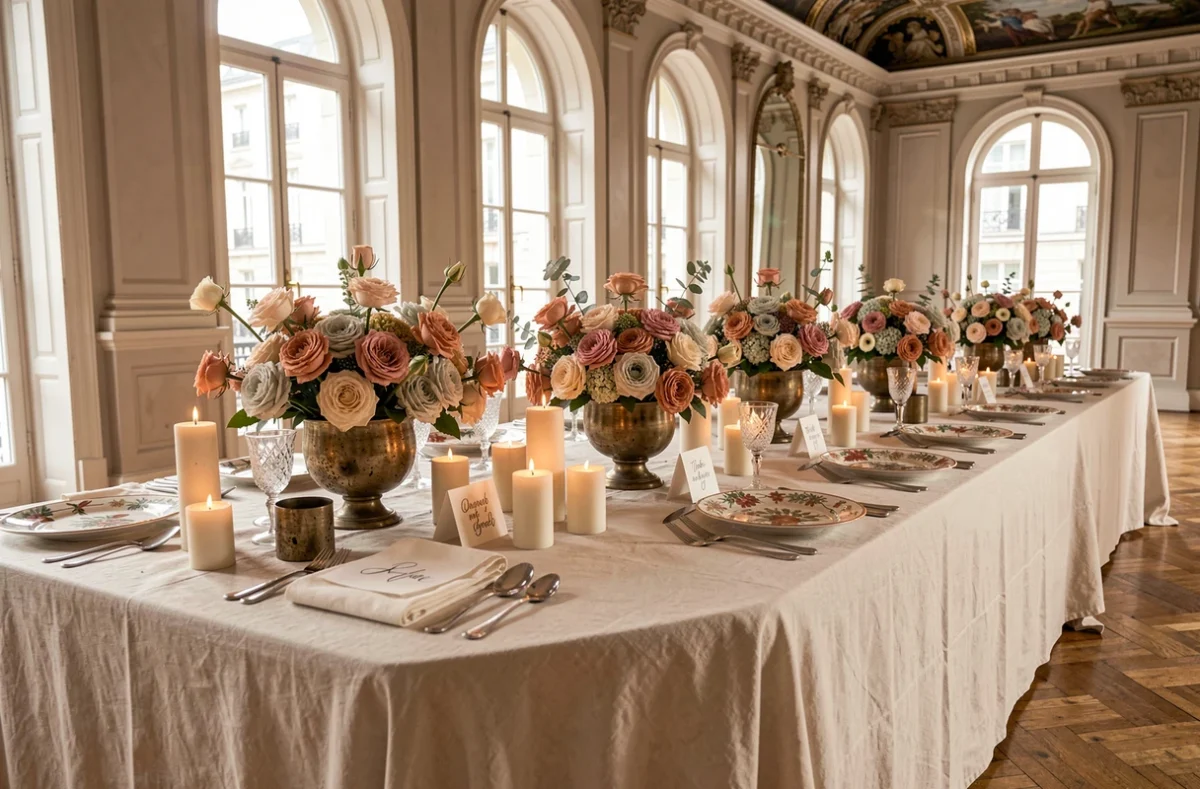
A common mistake is to apply the chosen color to every element of the table and room. The result is often monotonous. Limiting the dominant color to three visual supports (floral arch, centerpieces, stationery for example) and leaving the rest in neutral tones creates a more readable effect.
The choice of materials is as important as the color. A sienna velvet does not yield the same result as linen of the same color. The texture alters the perception of color under natural or artificial lighting, a parameter rarely considered when selecting on screen.
Eco-Responsible Wedding Decoration: What the Term Actually Covers
The eco-responsible wedding is not limited to replacing imported flowers with local ones. The term encompasses decisions regarding tableware (reusable or compostable), guest transportation, the origin of textile materials, and waste management at the end of the reception.
Renting decorations (vases, candlesticks, furniture) is the most accessible lever. It reduces the volume of items purchased for single use and allows access to higher quality pieces than the purchase budget would allow.
Seasonal Flowers and Short Supply Chains
Choosing seasonal flowers available locally alters the range of colors and shapes accessible. A wedding in June does not offer the same varieties as a wedding in October. The local floral calendar conditions the palette as much as the aesthetic choice.
Working with a florist who sources locally means validating the available varieties several weeks before the event, as the stock depends on the actual harvest and not a permanent catalog.
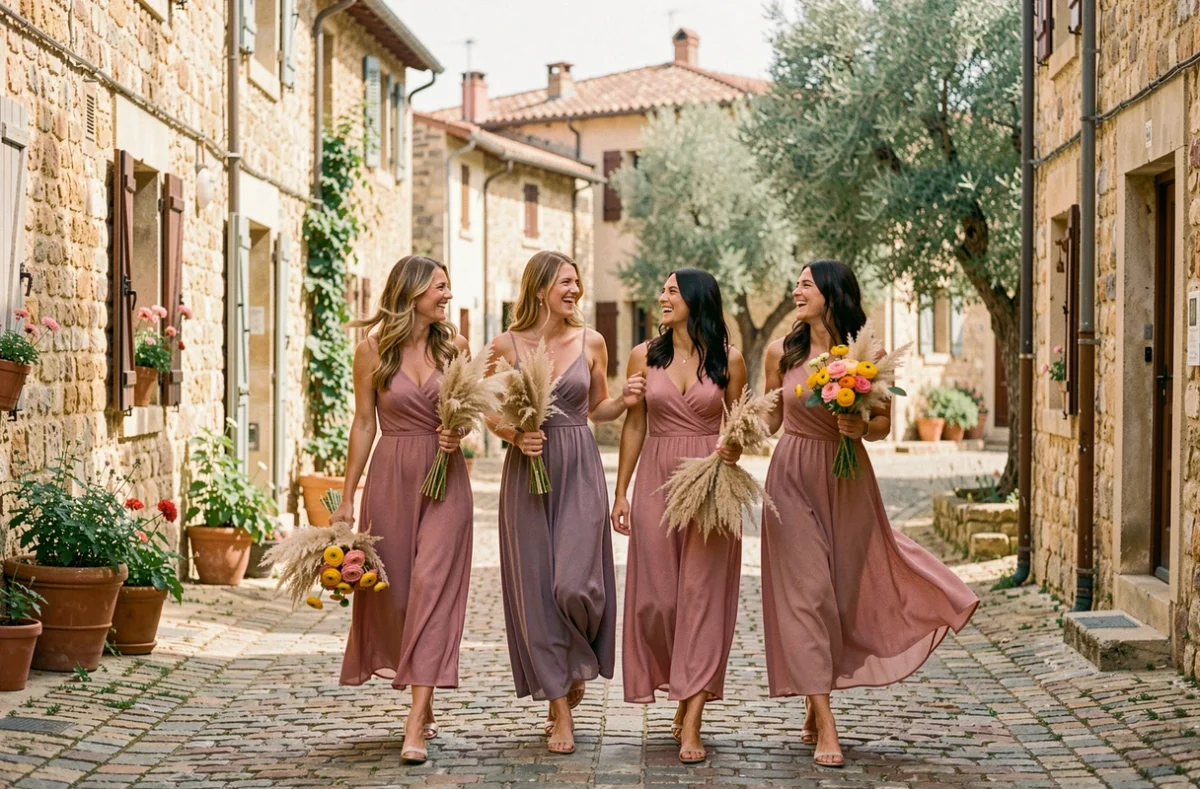
The wedding of 2024 is built on structuring choices, not just decorative ones. The order of the civil then secular ceremony, the format over one or several days, the color palette, and the sourcing strategy form a framework. Couples who lay these foundations before choosing their first centerpiece gain coherence and avoid last-minute adjustments that strain the budget.